
Last updated November 17, 2026
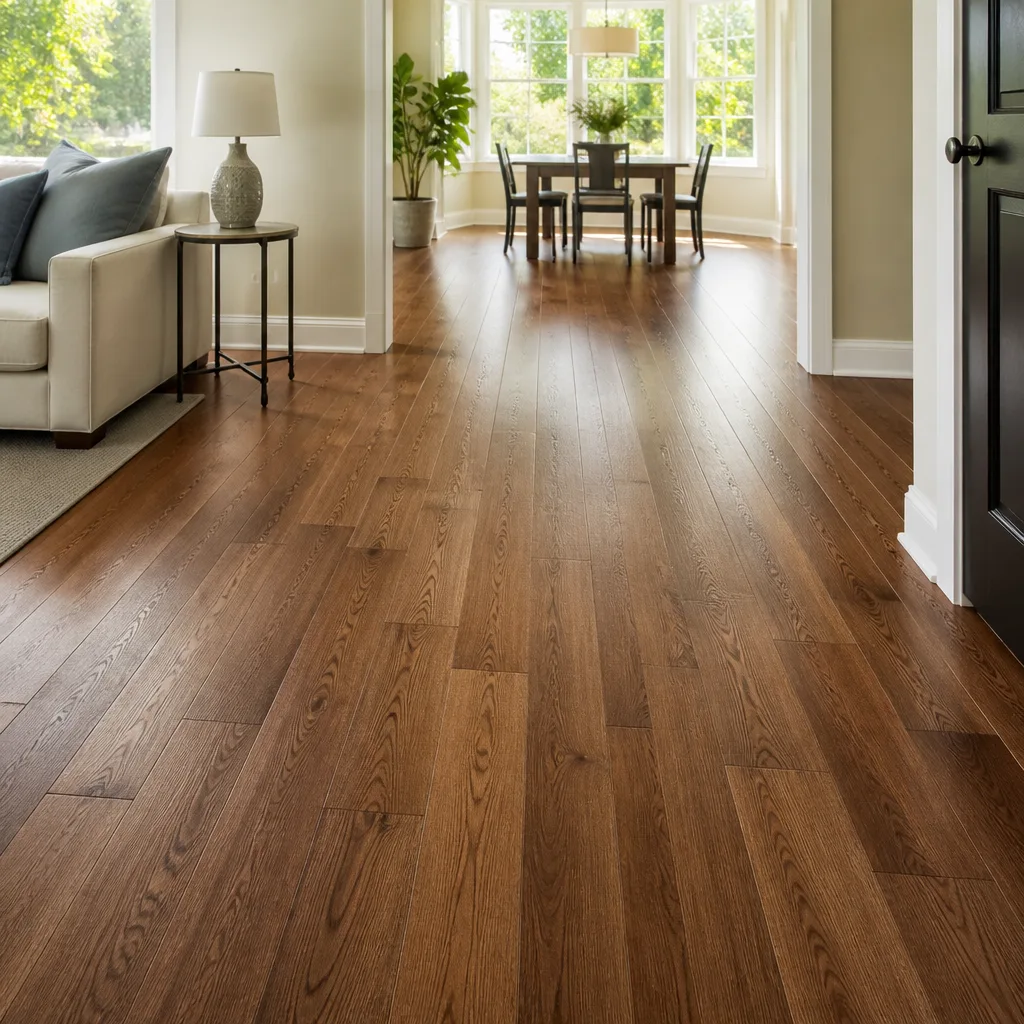 Hardwood
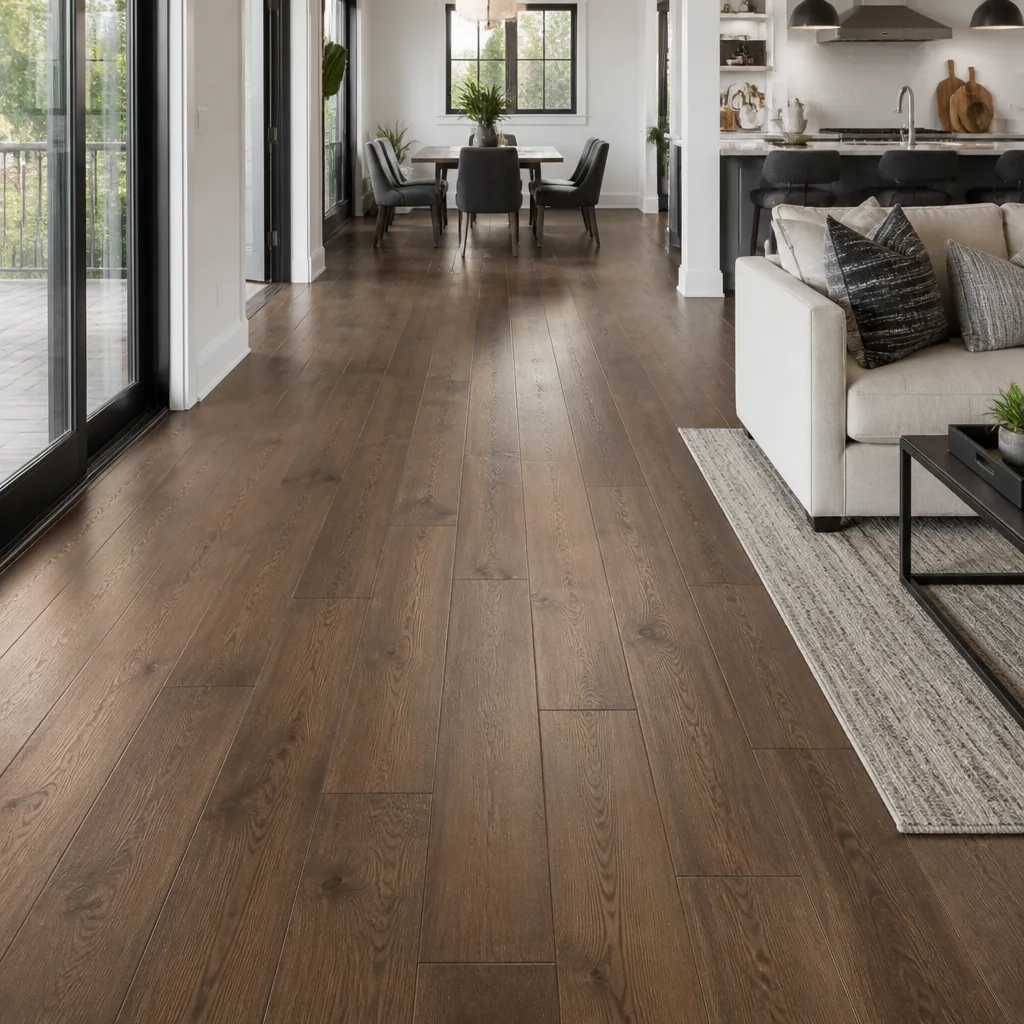 Engineered hardwood
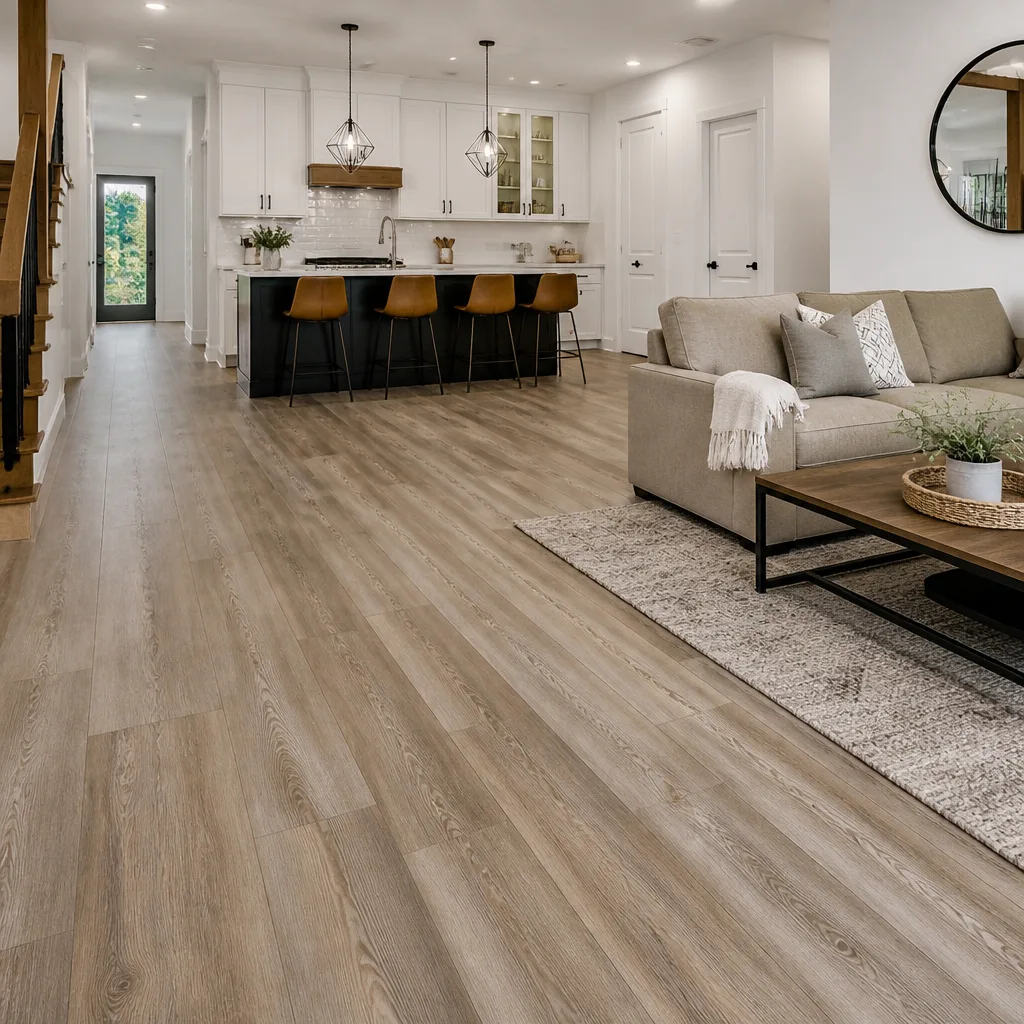 Luxury vinyl plank
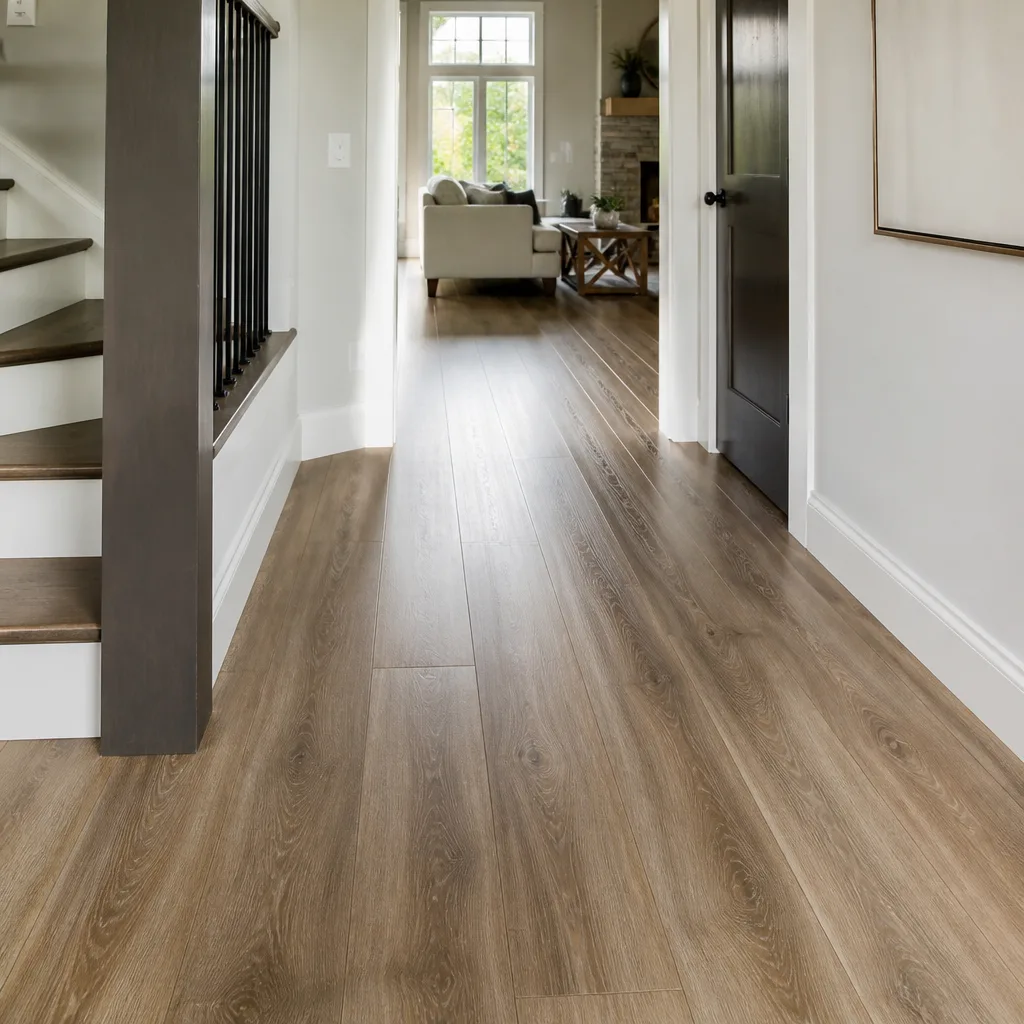 Laminate
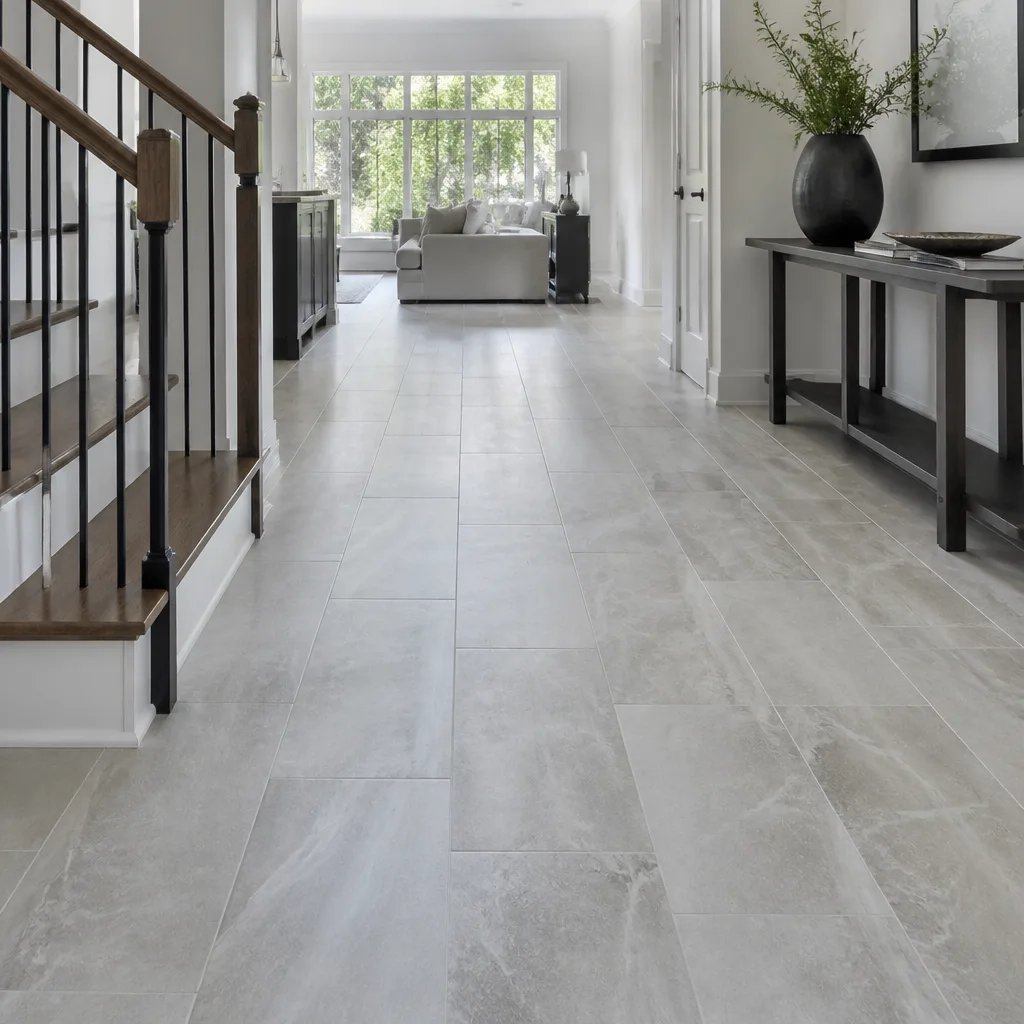 Porcelain tile
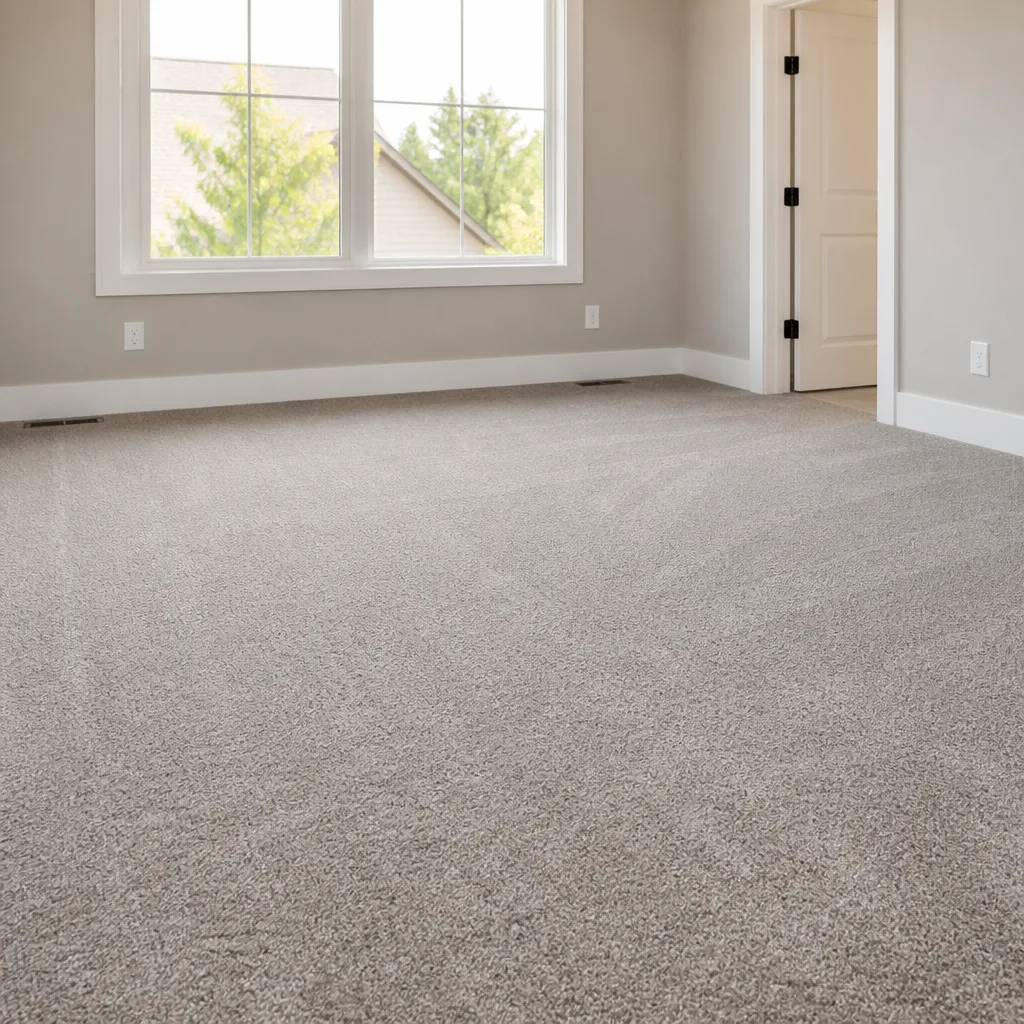 Carpet
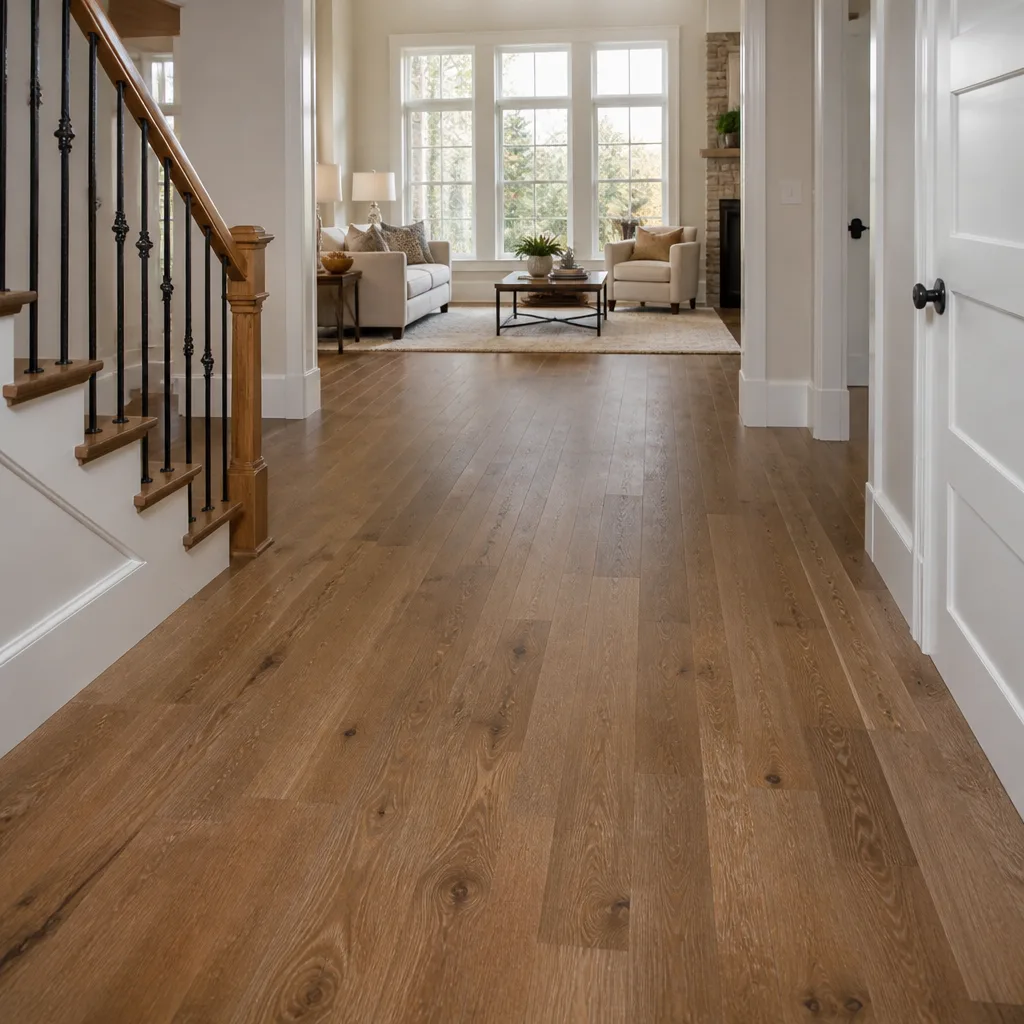 Shaw
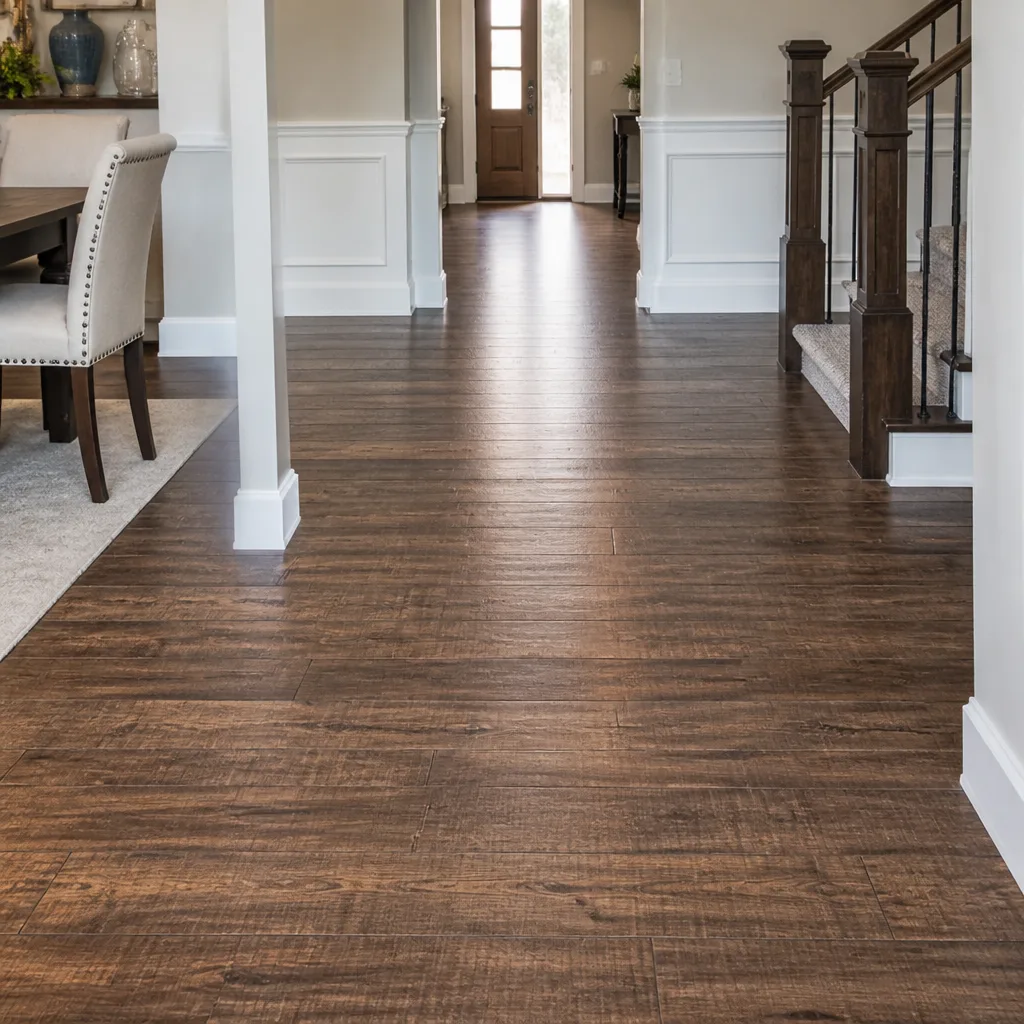 Mohawk
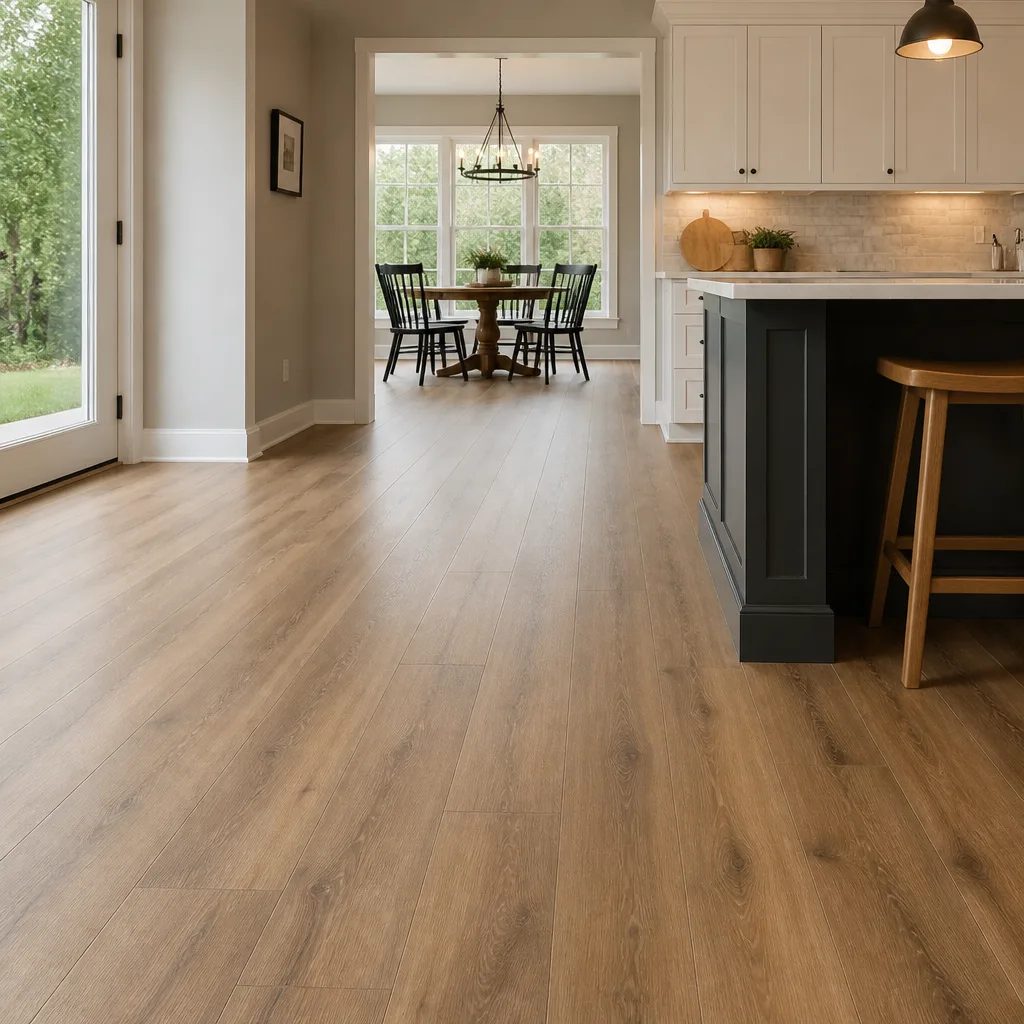 COREtec
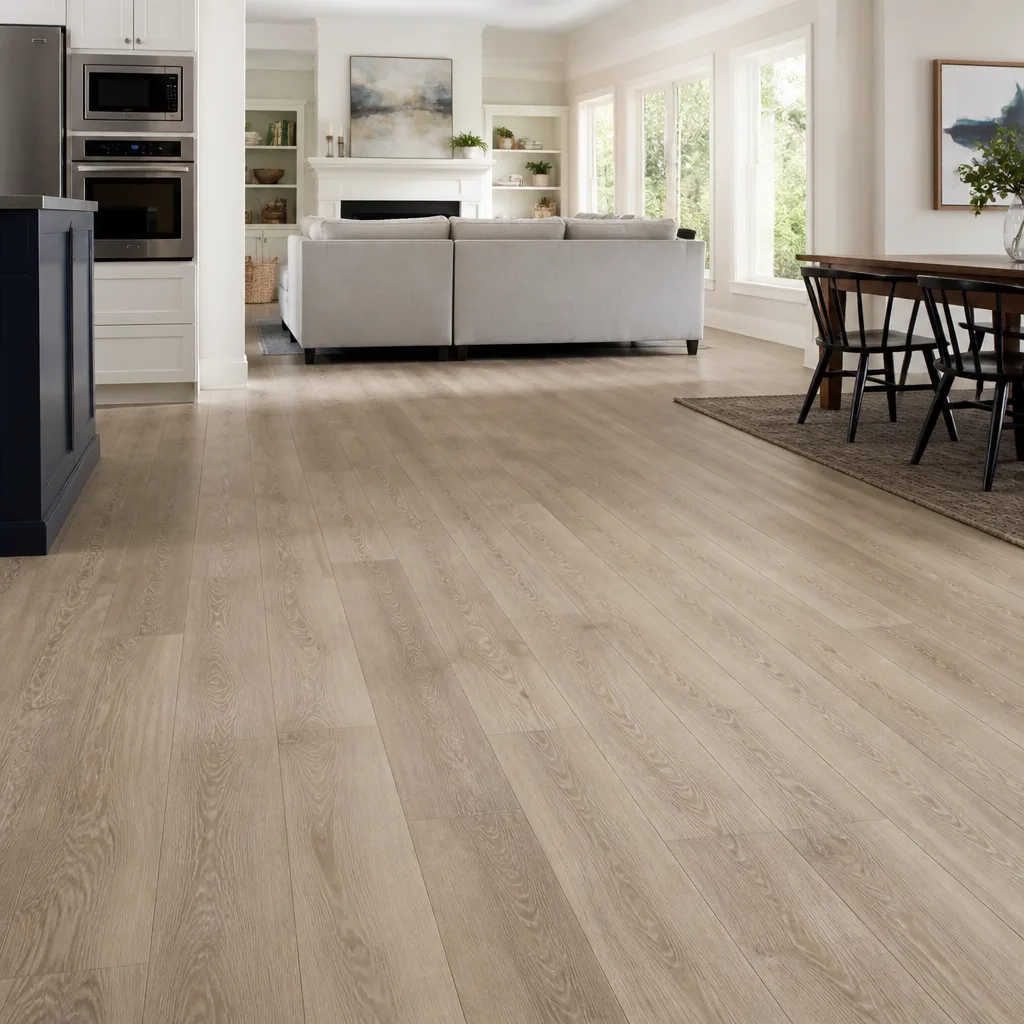 Pergo
Free in-home measure and written estimate: Shaw, Mohawk, COREtec and Pergo lines compared on your own rooms, with carpet, tile, vinyl plank, laminate and hardwood laid out side by side
Get your free estimateHow Sunrise Manor’s Climate Can Affect Your Flooring Choice
Most flooring advice about the desert tells you the air is dry, so pick something that won’t warp. That’s only half the story. In Sunrise Manor, the weather outside is rarely the problem. The problem is what happens inside: a house that runs its air conditioner almost continuously for months, cycling between cool and warm, dry and briefly humid, sealed tight against the heat. The floor lives through every one of those swings. We’ve walked into Sunrise Manor homes where a solid hardwood floor cupped in a single season, not because the homeowner did anything wrong, but because the material and the climate were never matched. This guide explains why Sunrise Manor’s climate stresses flooring the way it does, which materials handle it, and what to check before you commit.
Quick Answer
The best flooring for a Sunrise Manor home depends less on the weather outside than on the microclimate inside. Because most local homes sit on concrete slabs and run heavy air conditioning, the winning choices are dimensionally stable products that tolerate humidity swings, a moisture barrier that addresses the slab, and careful acclimation before installation. Engineered-core options like COREtec and Shaw’s engineered lines handle Sunrise Manor’s conditions better than standard solid hardwood, while Daltile tile remains the most climate-neutral choice when the slab is properly flattened first.
Styles & brands we work with
- Hardwood
- Engineered hardwood
- Luxury vinyl plank
- Laminate
- Porcelain tile
- Carpet
- Shaw
- Mohawk
- COREtec
- Pergo
Table of Contents
- Why Sunrise Manor’s Indoor Microclimate Matters More Than the Weather
- Concrete Slabs and the Moisture That Never Fully Leaves
- Solid Hardwood in Sunrise Manor: What You’re Really Signing Up For
- Engineered and Waterproof-Core Product Strategy
- The HVAC Consistency Test Every Sunrise Manor Homeowner Should Run
- Tile as the Safe Default, and When It Isn’t
- Acclimation Windows That Actually Hold Up in Sunrise Manor
- Matching Materials to Sunrise Manor Rooms
Why Sunrise Manor’s Indoor Microclimate Matters More Than the Weather
Sunrise Manor sits in the Las Vegas Valley, where summer days push past 100°F and winter nights drop to freezing. But your floor doesn’t live outside. It lives in a sealed, air-conditioned box, and that box has its own climate. A typical Sunrise Manor home runs its cooling system hard through the hot months, which pulls relative humidity down into a very low range. Then the compressor cycles off, or the house sits vacant while you’re away, and both temperature and humidity climb. The floor absorbs that swing, expanding and contracting every cycle.
That’s what separates Sunrise Manor from a generic desert market. It isn’t the dry air itself that ruins floors; it’s the amplitude of the swings and the speed with which they happen. We’ve seen a well-built home go from a comfortable indoor temperature to a much warmer, more humid interior when the system shuts down in a summer outage. A floor that tolerates the average just fine can fail at the extremes.
Three local conditions drive those extremes:
- Slab-on-grade construction anchors most Sunrise Manor homes to concrete, which moves heat and moisture into the floor differently than a raised wood-frame crawlspace would.
- Long cooling seasons mean the HVAC system runs nearly year-round, so the indoor humidity tracks the system’s duty cycle rather than the outdoor forecast.
- Monsoon moisture arrives briefly in the late summer, when the outside air carries more humidity than the house is designed to handle, and a sealed house can hold that moisture for days.
The takeaway: match your flooring to the numbers inside the house, not the ones on the evening news.
Concrete Slabs and the Moisture That Never Fully Leaves
If your Sunrise Manor home is built on a concrete slab, the ground underneath holds more moisture than most homeowners assume. Irrigation from landscaping, the occasional heavy monsoon rain, and groundwater all move through the soil below. Concrete is porous at the microscopic level, and moisture vapor migrates up through the slab continuously. In a climate this dry, homeowners assume the ground must be dry too. It usually isn’t. The sun bakes the surface, but the slab below stays in contact with soil that holds water.
That vapor reaches your floor from beneath, and no surface treatment on top of the slab stops it. If a glue-down install goes over a slab that’s still releasing vapor, the adhesive lets go, the edges cup, and the floor starts to move. Any flooring professional who skips a moisture check on a Sunrise Manor slab is guessing. Ask how the slab will be tested and what barrier or underlayment is planned before any glue goes down.
What matters during the estimate:
- Test the slab, not just the surface. Moisture vapor moves through concrete continuously, so a measurement today doesn’t guarantee tomorrow. Ask about testing done at the time of the install.
- Ask what barrier is specified. Underlayment, a moisture-blocking membrane, or a floating floor with an attached pad all change how vapor is handled.
- Check the grade around the house. Soil that slopes toward the foundation sends water into the slab. Correcting that is landscaping work, but it protects any floor you install.
- Plan for monsoon season timing. If you’re installing during or just after the late-summer humid stretch, the slab reading and the install plan have to account for it.
Concrete slabs set the floor of the house in more ways than one. They hold moisture, they hold heat, and they dictate which products can be glued or floated over them. Get the slab question right before you choose a material, not after.
Solid Hardwood in Sunrise Manor: What You’re Really Signing Up For
Standard solid hardwood, the kind most people picture when they think of traditional wood floors, is a high-risk choice in Sunrise Manor without deliberate humidity control added to the house. Solid boards are one finish of the same material through their full thickness, so every bit of expansion and contraction translates across the whole plank. In a home without whole-home humidification, the swings we described earlier push those boards through a wide movement range, and the seasonal result is gaps in winter, edge cupping after a humid stretch, or a floor that moves more than it should around the perimeter.
That’s not a knock on solid hardwood. It’s the right floor for the right house. But in Sunrise Manor, “right house” means a home with dedicated humidification and consistent thermostat discipline, and those are rare. If you already have hardwood and aren’t ready to replace it, refinishing is worth considering. A good refinish can restore an existing solid floor and save the cost of a full replacement, and that financial argument is real. Whether your particular floor can be sanded and refinished depends on how much thickness it has left and how much wear it carries, which is checked at the estimate visit, never promised over the phone. A stain match to a sample is possible but never guaranteed.
Questions to settle before choosing solid hardwood in Sunrise Manor:
- Does the house have a whole-home humidifier, or is the homeowner willing to add and operate one?
- Is there a backup plan if a power loss pushes the interior through a sudden swing?
- Is the floor a glue-down over slab, or a nail-down over a wood subfloor? The first requires a moisture plan; the second doesn’t have the same risk.
- What thickness is left if refinishing is an option, so the floor gets a second life rather than a full replacement?
Solid wood floors belong in Sunrise Manor houses where the homeowner is prepared to treat the indoor climate as a floor-care system, not just a comfort system.
Engineered and Waterproof-Core Product Strategy
Engineered products are built with a real hardwood or composite wear layer over a core that’s dimensionally stable through humidity swings. That’s exactly the quality Sunrise Manor homes need. The core resists the movement that sends solid wood through seasonal gaps and cups. Products like Shaw’s engineered lines and COREtec’s waterproof-core planks are made for this kind of interior, and we install both. The engineering behind them solves a physical problem that decorative finishes alone can’t.
That doesn’t mean every engineered floor is equal. What matters is how a product handles three things: humidity swing, slab vapor, and the expected traffic in the room. A few guidelines to guide the choice:
- Waterproof-core planks like COREtec handle the slab-moisture question with a built-in barrier and a core that doesn’t swell at the seams. Good for kitchens, baths adjacent, and whole-home installs where one product runs across rooms.
- Engineered hardwood gives a genuine wood surface and better dimensional stability than solid, but it still benefits from a moisture plan over a slab.
- Design-led luxury vinyl from Karndean offers a soft, decorative look with the stability of a composite core, well-suited to Sunrise Manor’s rooms that see temperature but not standing water.
- Pergo and other resilient options work well in transition spaces and secondary rooms where durability matters more than natural finish.
Waterproof is a strong word and we use it carefully. Water-resistant products are just that; they resist. Standing water and moisture rising from below still have to be dealt with, regardless of what the label says. A waterproof core keeps normal spills and cleaning from becoming a problem. It doesn’t mean a slab leak or a monsoon-dumped wash of water is a non-issue.
Our recommendation for most Sunrise Manor homes is to start with one question: does the room see standing water, and does the slab see moisture? If either answer is yes, a waterproof-core plank or a properly set tile is the direction. If both answers are no and the homeowner wants the look of wood, engineered hardwood is a solid middle path.
The HVAC Consistency Test Every Sunrise Manor Homeowner Should Run
Before you pick a material, learn how your specific house handles humidity through a day. The outdoor forecast doesn’t tell you this, and a product catalog never will. Every home has a baseline, and older or oversized HVAC systems create bigger relative-humidity swings than the outside climate alone would suggest. A unit that cools the house quickly and then sits idle while it warms up cycles the interior through wider swings than a unit that holds a steady temperature. That variance is what the floor feels.
A short test you can run yourself, no special equipment beyond a basic humidity and temperature reading, goes a long way:
- Pick a week that’s typical of the season you’re worried about, not the mildest week of the year.
- Record temperature and humidity indoors at the same spot twice a day over that week, ideally early morning and late afternoon when the system has either run hard or held idle.
- Note the system’s cycle separately. Is it oversized, cycling on and off frequently, or does it run continuously and hold a barely-changing interior reading?
- Repeat at the end of a stretch when the house was closed up, since a sealed house reabsorbs moisture differently than a home with doors and windows open periodically.
- Bring those numbers to the estimate. A flooring professional can match material tolerance to what the house actually does.
This is the part that most homeowners skip, and it’s the single biggest factor in whether a floor performs in Sunrise Manor. You’ll use these readings to decide between solid and engineered, between glue-down and floating over the slab, and how much of a moisture barrier the underlayment needs to carry. It’s easier to spend an hour measuring than a season learning the hard way.
Tile as the Safe Default, and When It Isn’t
Tile is the most climate-neutral flooring choice for a Sunrise Manor home. It doesn’t absorb moisture the way wood does, it doesn’t move with humidity swings, and it holds up to heat and cleaning without drama. Our tile flooring installation work with Daltile covers kitchens, baths, entries, and whole-floor layouts where a homeowner wants something that needs no acclimation period and no humidification plan.
But “tile is safe” isn’t the whole truth, and we’ve corrected enough tile jobs to know where it goes wrong. The failure point isn’t the tile. It’s the slab underneath. Large-format rectified tile has very tight joint tolerances and very little forgiveness. When it’s set on a slab that hasn’t been properly flattened, every high and low spot telegraphs through. You get lippage at the joints and uncoupling over time, and it shows up within a couple of years, not on installation day. The fix at that point means tear-out and a redo.
Slab flatness is checked with a straightedge during the estimate stage, and any high or low spots get addressed with grinding or a leveling compound before the first tile goes down. That prep work is the difference between a tile floor that lasts and one that starts talking to you a few months in. If your environment has had plumbing work under the slab, add a moisture check to the prep plan as well; the concrete around penetrations can behave differently than the rest of the floor.
When tile isn’t the right call in Sunrise Manor: rooms over wood-framed subfloors that may flex, areas where a homeowner wants a soft feel underfoot in a bedroom, and any spot where the budget needs to stretch across more square footage than the tile prep will allow. In those cases, the waterproof-core or engineered route usually fits better.
Acclimation Windows That Actually Hold Up in Sunrise Manor
The acclimation instructions on a flooring box are written for a typical house in a typical climate: bring the material indoors and let it sit for the stated window so it adjusts to the home’s interior conditions. In Sunrise Manor, that guidance often falls short. The problem is the products were manufactured and shipped in conditions that aren’t your house, and a home that sat vacant and unconditioned through the summer before a renovation has an interior nothing like the “room temperature” the box assumes.
Here’s how we handle acclimation across different products in local conditions:
- Engineered and waterproof-core products are the most forgiving, but “most forgiving” isn’t “instant.” They still need time at interior conditions, and the amount depends on the product and the home, which the written estimate sets.
- Solid hardwood needs the full acclimation to the specific room it’s going into, and the room needs to be at the same humidity the floor will experience while it lives there. A house that’s still being worked on has a different interior than the same house in steady use.
- Tile doesn’t acclimate in the same way, so the prep condition of the slab carries the load. Skip the flatness check and the acclimation conversation becomes irrelevant.
- Any product in a vacant, unconditioned home needs extra time before install, once the HVAC is running and the house has stabilized. We check the readings rather than trusting the calendar.
Fair warning: the 48-hour window printed on a carton is not a Sunrise Manor acclimation plan on its own. It’s a starting point that assumes stable indoor conditions. If your home sat vacant and unconditioned, or if you’re installing during a stretch when the AC gets cut back or off, the material needs more time, not less. We check ambient readings against the product instructions rather than the dates on a box. If the numbers don’t match, the floor waits.
Matching Materials to Sunrise Manor Rooms
No single product wins across every room in a Sunrise Manor house. Matching the material to how each room sees heat, humidity, and foot traffic is how to spend the budget wisely.
- Kitchen and laundry rooms: waterproof-core planks like COREtec belong here. These rooms see spills, cleanup, and slab moisture, and a sealed core handles all three better than wood.
- Living and family rooms: engine
tered hardwood or a design-led vinyl from Karndean gives the room the finished look most homeowners want. Both tolerate the interior swing with a solid moisture plan over the slab.
- Bathrooms and entries: tile with careful slab prep. These are the rooms where water and dirt enter, and they’re the least forgiving of a floor that lifts.
- Bedrooms: carpet installation in a bedroom remains a strong choice in Sunrise Manor, though the padding and backing matter. Over a slab, a moisture-blocking underlayment under the pad keeps the slab’s vapor from reaching the carpet.
- Whole-home runs: pick a single product family that can cross rooms, so transitions stay tight and the home reads as one floor. Our Sunrise Manor Flooring work across carpet, tile, and hardwood refinishing is built for exactly that.
Two structural variables drive the choices in every one of those rooms. First, is the floor over slab or a wood frame? Second, does the room see direct water? The answers narrow the field more than any catalog viewbook can.
Common Mistakes to Avoid
- Trusting the 48-hour box acclimation. It’s written for a typical house, not a Sunrise Manor home that sat vacant and unconditioned. Check the actual indoor readings before installation.
- Skipping the slab moisture test. In this part of the valley, irrigation and monsoon moisture sit in the soil under the concrete longer than homeowners expect. Glue-down installs fail over an untested slab.
- Putting standard solid hardwood in a house with no humidification plan. Without deliberate indoor humidity control, the seasonal swing will eventually show up as gaps or cupping. If you love the wood look, engineered is the safer version in Sunrise Manor.
- Installing large-format tile on an unflattened slab. The tile is fine; the slab underneath isn’t. Without a straightedge check and leveling prep, lippage shows up within a couple of years.
- Treating “waterproof” as “no moisture plan needed.” A waterproof core resists spills. It doesn’t turn a wet slab into a dry one. Vapor from below still has to be handled at the underlayment layer.
- Ignoring the HVAC cycle before buying. An oversized or aging air conditioner creates wider indoor swings than the outdoor weather alone. Test the house’s baseline before choosing material, not after.
- Assuming bigger is better for tile. Large-format tile looks clean-lined, but it telegraphs slab imperfections more than smaller formats. On an older Sunrise Manor slab, a smaller format can be the wiser spend.
See the difference
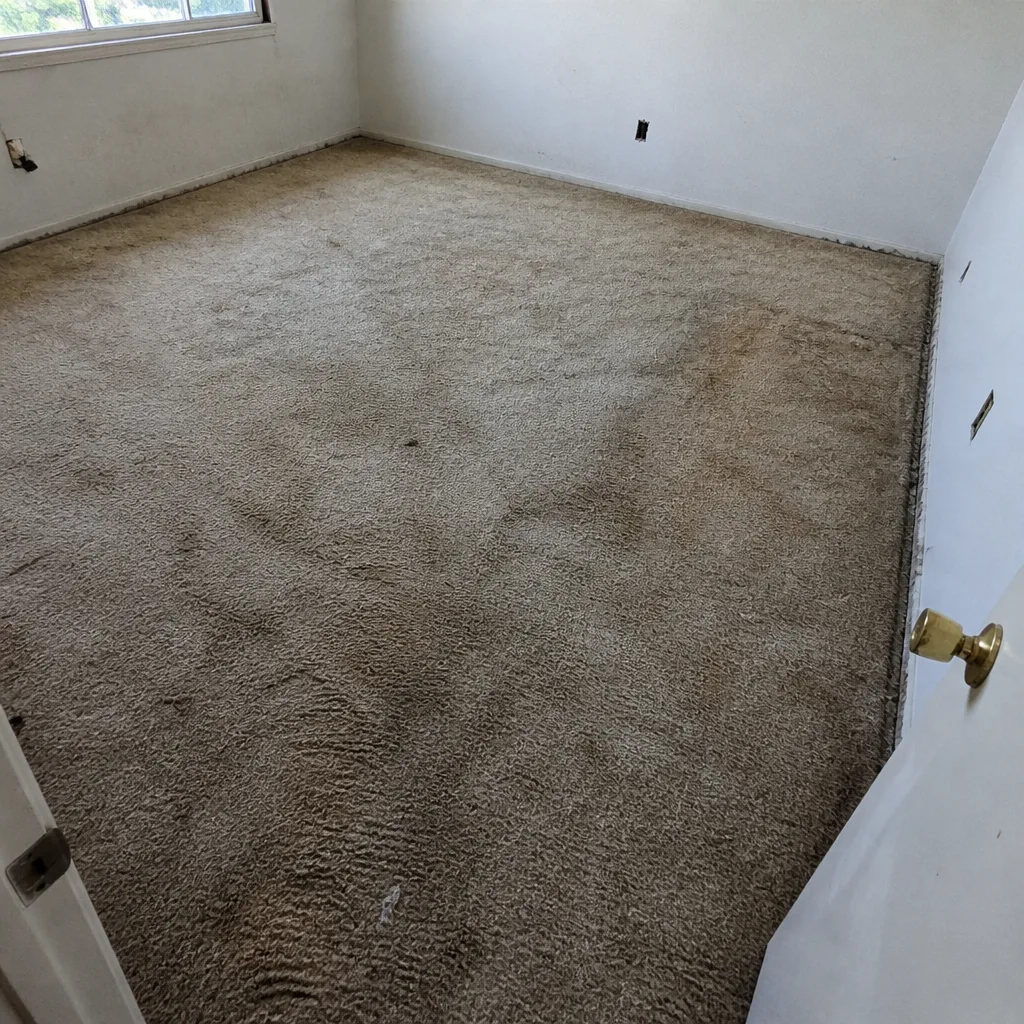 Before
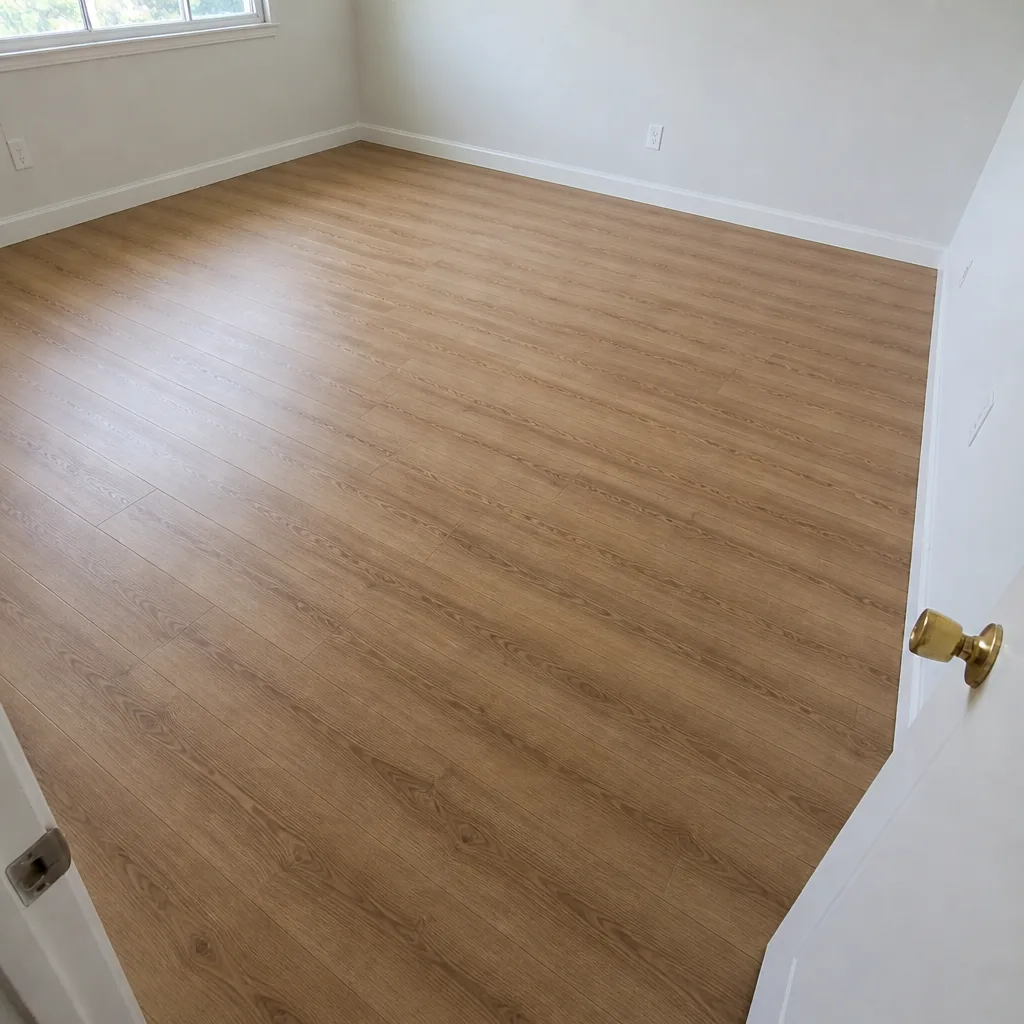 After
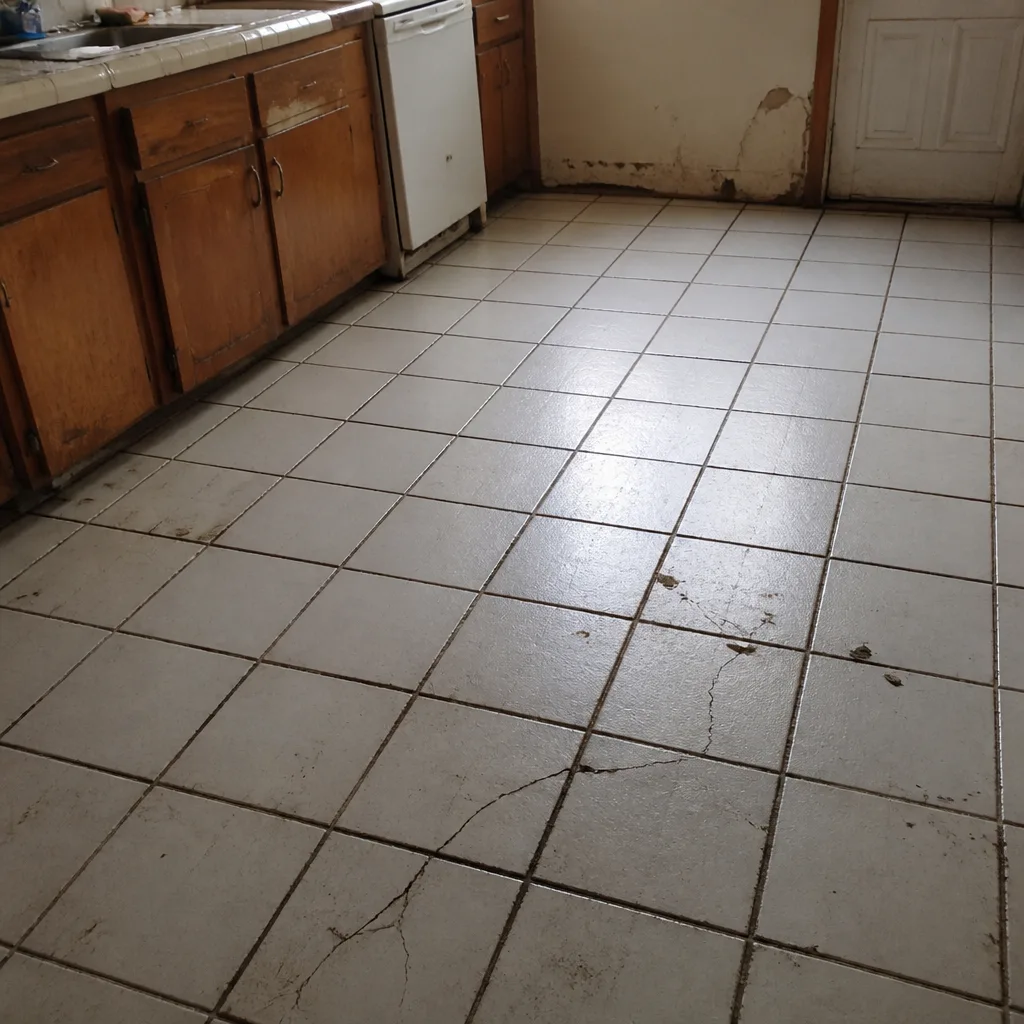 Before
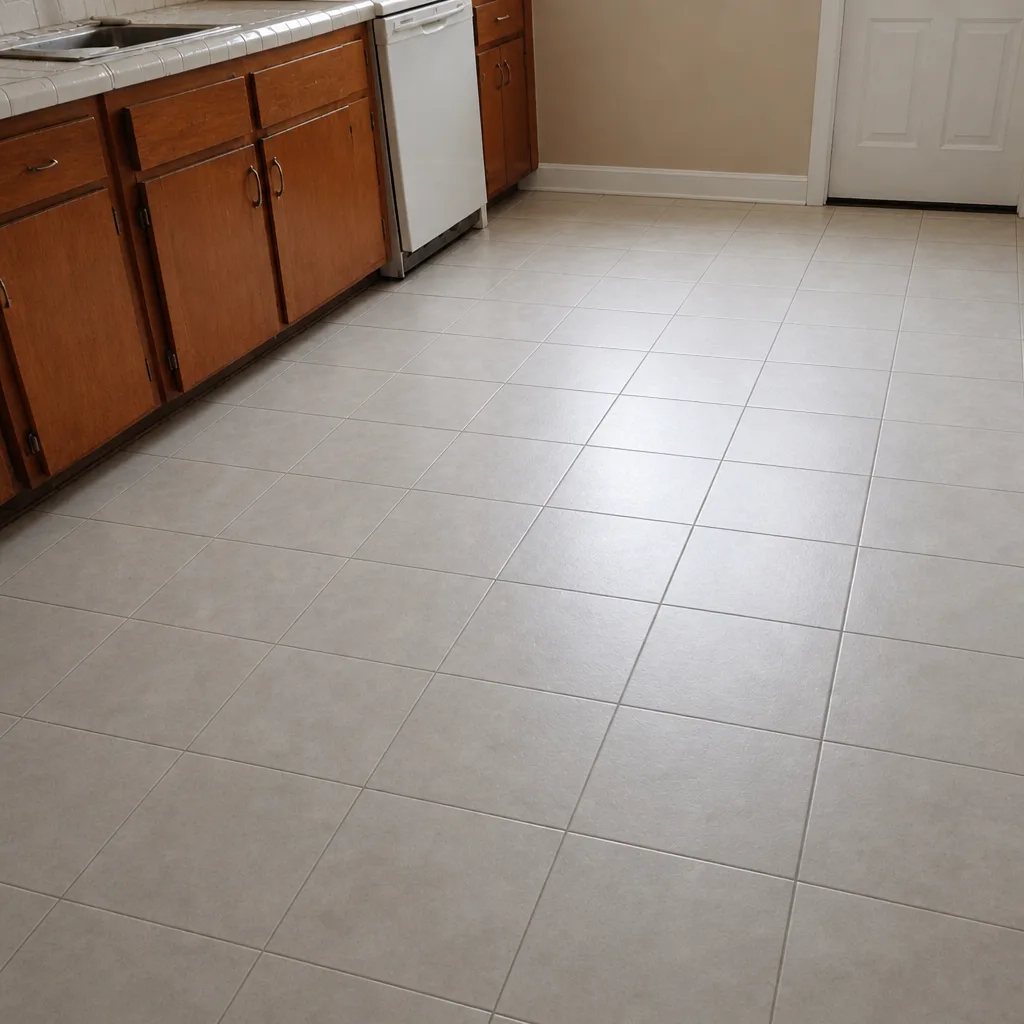 After
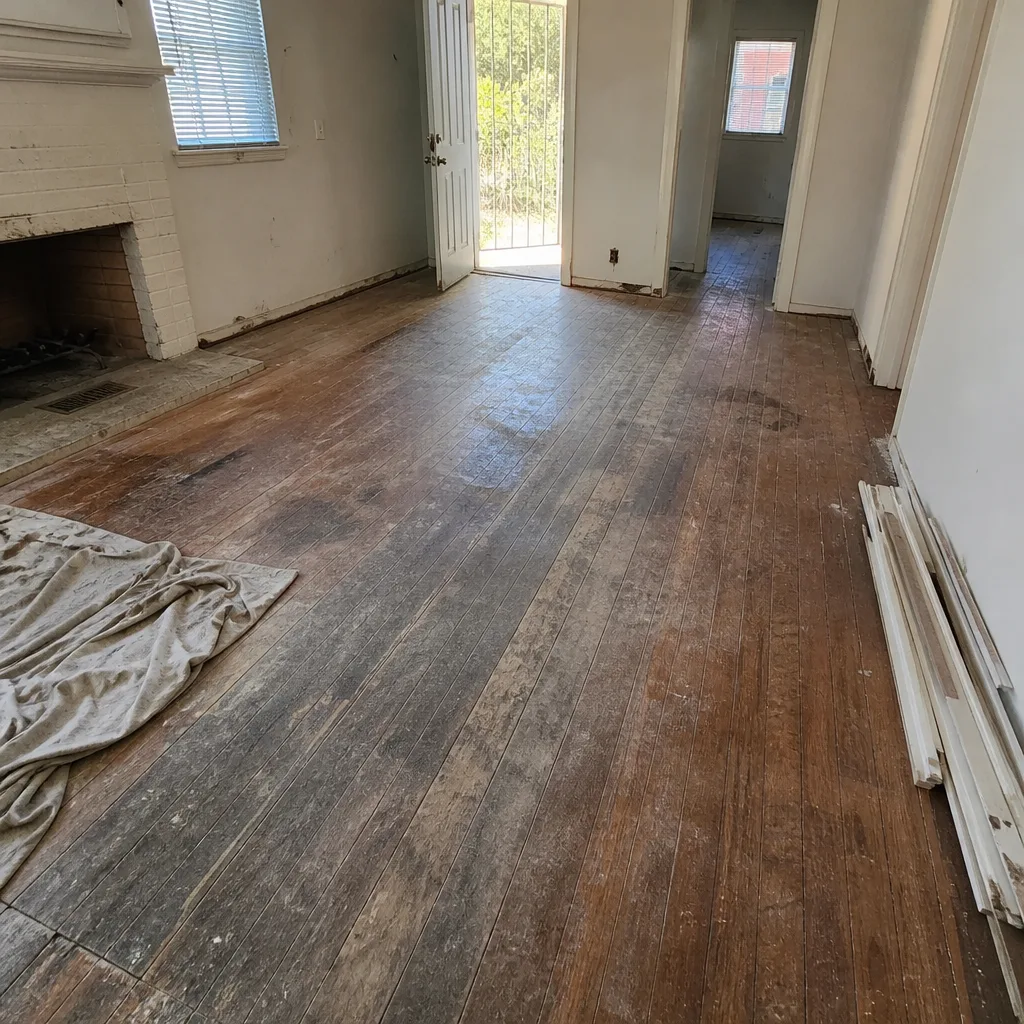 Before
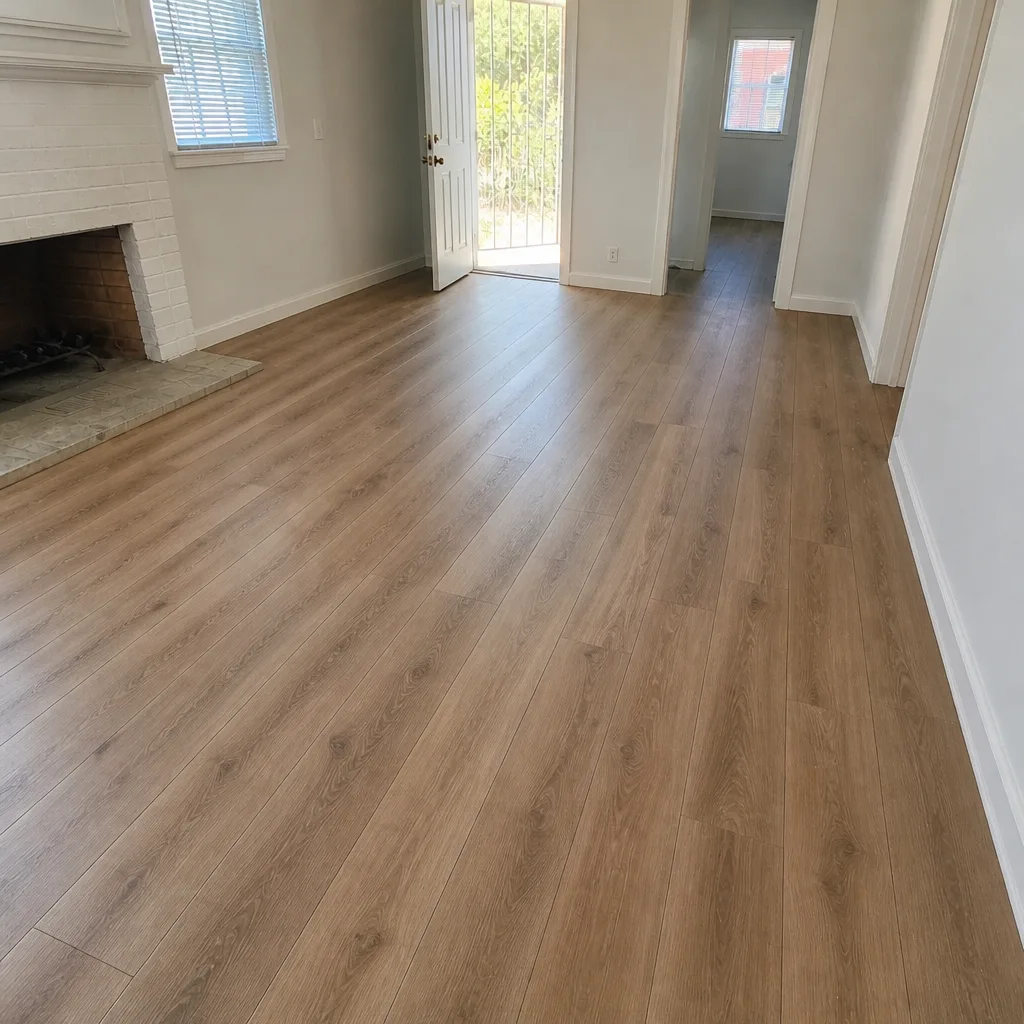 After
When to Call a Professional
Some of this you can reasonably check on your own: the indoor readings, the HVAC cycle, the grade around the foundation. But several of the risks in this guide are genuinely hard for a homeowner to assess safely. Slab moisture and flatness require equipment and readings that only a trained installer will interpret correctly. Adhesive selection, underlayment, and the decision to glue down over a slab all affect how long the floor holds up, and getting one of them wrong is expensive to undo.
Call us when you’re ready to move from planning to installing. That includes a whole-home update, a single-room renovation, or restoring a hardwood floor you’d rather refinish than replace. Sunrise Manor Flooring offers free estimates in Sunrise Manor: call (833) 695-5999 to set up the walkthrough. We’ll measure the slab, check the rooms’ readings, and write up a clear estimate before any material is ordered.
Frequently Asked Questions
Engineered and waterproof-core products hold up best, followed closely by properly installed tile. Solid hardwood can work in a home with deliberate humidity control, but without it, the interior swings are too wide for that material. For most Sunrise Manor homes, a waterproof-core plank like COREtec or a resilient option from Pergo is the most reliable starting point, and a free estimate will confirm what your specific slab and rooms need.
Flooring pricing in Sunrise Manor depends on material, room size, and slab or subfloor prep, so there’s no fixed number to quote here. A walkthrough and a written estimate are the only way to get a real price, and they’re free. Call (833) 695-5999 for a free estimate, and we’ll price the job room by room.
Yes. The estimate visit and the written quote are free, including the room measurements and slab checks that affect the price. You get a written estimate with no obligation to book, and an exact price for the job. Call (833) 695-5999 for a free estimate.
The timeline depends on the product, the room sizes, and any prep work the slab needs, so it’s set at the estimate visit rather than quoted over the phone. Prep, acclimation, and installation add up differently for tile than for engineered hardwood or carpet. Your written estimate sets the work and the schedule, and you’ll know what’s planned before the job begins.
Yes, and most Sunrise Manor homes do, but a slab install needs a moisture and flatness check first. Concrete releases vapor continuously and often has high and low spots that affect how a floor behaves. The estimate visit will confirm what barrier and prep are needed before a floor goes down.
It’s the indoor swings, not the outdoor climate. Sunrise Manor homes run long cooling seasons in a sealed house, which drives indoor humidity down and back up with the system’s cycle. Solid hardwood moves with every one of those swings, and without whole-home humidification the result is gaps or cupping. If you love the wood look, engineered hardwood with a stable core handles those conditions better.
The Bottom Line
Sunrise Manor’s climate asks a lot of flooring, but the stresses come from inside the house more than outside of it. Concrete slabs release moisture that never fully leaves, so every slab install needs a vapor plan. Standard solid hardwood is a risky choice without whole-home humidification, while engineered and waterproof-core products handle the swings. Tile is the most climate-neutral option, provided the slab is flattened before install. And the acclimation window on the box is a starting point, not a schedule. Get the indoor readings, the slab check, and the material matched correctly, and your floor will settle in for the long haul. Call (833) 695-5999 for a free estimate in Sunrise Manor and we’ll walk through your rooms with you.
Written by the team at Sunrise Manor Flooring.