
Last updated November 17, 2026
 Hardwood
 Engineered hardwood
 Luxury vinyl plank
 Laminate
 Porcelain tile
 Carpet
 Shaw
 Mohawk
 COREtec
 Pergo
Free in-home measure and written estimate: Shaw, Mohawk, COREtec and Pergo lines compared on your own rooms, with carpet, tile, vinyl plank, laminate and hardwood laid out side by side
Get your free estimateFlooring Installation Questions to Ask Before You Sign
The most expensive flooring dispute in a Sunrise Manor install rarely involves the floor itself. It involves who is responsible for the subfloor prep that failed six months later, a question almost no homeowner thinks to get answered in writing before work begins. Most people walk into this process worried about carpet style or tile grout color, and they sign a contract that never says a word about moisture readings, flatness tolerances, or what happens when the crew pulls up old flooring and finds something ugly underneath. In the pages that follow, we’ll walk through the questions that separate a smooth install from a painful one, with real contract language and the reasoning behind each ask. Sunrise Manor Flooring has watched enough of these projects from the estimate stage to know exactly where they go wrong.
Quick Answer
Before you sign a flooring contract in Sunrise Manor, get written answers to five things: who is responsible for subfloor prep and moisture testing, whether the installers are employees or day-of subcontractors, how the three kinds of warranty stack together, what the change-order process looks like if demo turns up a surprise, and what the payment schedule actually is. If a contractor can’t or won’t put those answers in the contract, that silence is your answer. A good written estimate is specific enough that both of you know exactly what “done” means.
Styles & brands we work with
- Hardwood
- Engineered hardwood
- Luxury vinyl plank
- Laminate
- Porcelain tile
- Carpet
- Shaw
- Mohawk
- COREtec
- Pergo
Table of Contents
- Who Owns Subfloor Prep and Moisture Responsibility?
- Are the Installers Employees or Day-of Subcontractors?
- How Do the Three Warranties Stack Up?
- What Happens When Demo Reveals a Hidden Problem?
- What Is the Standard Payment Schedule?
- How Does the Sunrise Manor Climate Affect Floor Choice?
- Which Brands Are Actually Being Installed, and Why?
- What Should Be on the Closing Walkthrough Checklist?
Who Owns Subfloor Prep and Moisture Responsibility?
This is the question that decides whether a floor lasts. Subfloor prep is the flatness correction, patching, and moisture testing that happens before a single plank or tile goes down, and it is where the vast majority of post-install flooring failures trace back to. A slab that reads wet, or a plywood deck that slopes more than a few degrees over ten feet, will telegraph through any floor no matter how premium the product. The product isn’t the problem in those cases. The prep was skipped, or it was done badly, or it was done and nobody documented it.
What you want in the contract is language that names the contractor as responsible for both flatness correction and moisture testing, with the values recorded and turned over to you. Something along the lines of: “Contractor is responsible for verifying subfloor moisture content and flatness prior to installation and will provide written readings in the project file.” That sentence is your insurance policy. Without it, a manufacturer can deny a claim by saying the prep didn’t meet their spec, and a contractor can respond that the homeowner supplied the slab. You end up in the middle.
In Sunrise Manor, this matters more than in many parts of the country. The valley’s dry air pulls moisture out of concrete at a different rate than coastal or humid climates, and slab-on-grade construction is standard in most of the neighborhoods here. That doesn’t mean your slab is dry, though. It means the reading on the day of the estimate may not match the reading on the day of the install, and prep has to account for that spread.
Ask your contractor three direct questions during the estimate:
- Will you take moisture readings and give me the numbers in writing?
- Who performs flatness correction, and is the cost of it inside this quote or billed separately if needed?
- What is the trigger that would stop the install and require prep first?
If the answer to any of those is vague, treat it as a no. For tile specifically, subfloor rigidity is the second half of the equation, and a qualified tile flooring installation should be able to explain how deflection was accounted for.
Are the Installers Employees or Day-of Subcontractors?
The crew that shows up on install day determines what actually gets done. Big-box stores and some independent retailers sell you the product and then hire a subcontractor to perform the install, sometimes on the same morning the materials are being loaded off a truck. That means the person who walks into your home may never have met the salesperson who wrote your contract, may not have seen your subfloor until that minute, and may not be reachable two months later if something goes sideways.
The contract question is simple: “Are the installers performing this work your employees, or subcontractors hired for this job?” A written answer tells you exactly who you have recourse with if there’s a problem. When the installers are employees, your point of contact remains the company from first call to final walkthrough. When they’re day-of subcontractors, you may find yourself trying to reach a contractor who is no longer working with the retailer, or working with a company whose name you never learned.
In our experience, the difference shows up most on the rough jobs. A subfloor that needs extra patching. A tile pattern that needs the layout to be reworked. A stair nose that needs to be fabricated on site. Employees have a relationship with the company doing the work and can make decisions about the extra hours. Subcontractors operating on a fixed bid often don’t, and the choices they make under time pressure aren’t always what you would want.
Two more questions to pair with this one:
- Will the same crew that does the demo also do the installation?
- Who is my point of contact if I have a question mid-project, and how do I reach them?
At Sunrise Manor Flooring, we handle carpet, tile, and hardwood refinishing with the same single-source accountability, which means carpet installation and tile work on the same home don’t require coordinating multiple contractors. That’s the standard your contract should be reflecting.
How Do the Three Warranties Stack Up?
Homeowners often walk away from a flooring purchase believing they have “a warranty,” when in fact three separate warranties apply and none of them covers everything they assumed. Understanding the layers before you sign prevents a lot of frustration six months later.
The first layer is the manufacturer’s product warranty. This covers defects in the material itself: a tile that crazes, a plank that delaminates, a carpet fiber that fails its backing. It does not cover installation errors. If the floor was installed over a wet slab, the manufacturer will typically decline the claim because the install didn’t meet specification.
The second layer is the contractor’s labor warranty. This covers the workmanship: seams that open, tiles that pop, transitions that lift. It’s usually shorter than the product warranty and is entirely dependent on the company still being in business and standing behind their work. Ask for the term in writing and ask what process applies if you need to file a claim.
The third layer, when it exists, is the retailer or installer’s satisfaction guarantee. Some companies offer a period after install during which they’ll correct problems without argument. Others don’t. Either answer is fine; what’s not fine is assuming it exists when the contract is silent.
Ask for the three warranties to be spelled out on one page:
- Product warranty: what it covers, what voids it, how long it runs
- Labor warranty: term, what constitutes a covered claim, how to file
- Satisfaction policy: what happens in the first weeks after install if something isn’t right
That single page tells you more about a flooring company than any brochure. For the harder conversations around a specific material, ask which layer actually applies if, say, a Mannington carpet seam opens in year two. You’ll want to know the answer before the floor is down.
What Happens When Demo Reveals a Hidden Problem?
The most common surprise during a flooring install is under the old floor. Pulling up carpet from a 1990s Sunrise Manor home can reveal cracked slab, a previous patch job, or a moisture issue that never showed at the surface. Pulling up tile can reveal that the original install was set over a subfloor that has since shifted. These aren’t contractor mistakes; they’re what happens when you open a floor.
The question is what the contract says will happen next. There are two common patterns, and only one protects you.
- Written change order required. The contractor stops work, documents the issue (photographs and a description), provides a written change order with the cost of the fix, and waits for your signed approval before proceeding. Nothing is charged or done until you authorize it.
- Hourly or time-and-materials billing. The contractor proceeds and bills you for the additional work without a written approval step. This can be reasonable, but only if the rate is disclosed in advance and the scope is described accurately.
You want the first pattern, or the second with very clear language. The words to look for in the contract are “no additional work will be performed without written authorization from the homeowner.” If those words aren’t there, get them added before signing. A legitimate contractor will have no problem putting them in. A contractor who resists that language is telling you something about how they handle surprises.
Pair the change-order clause with a “stop-work” clause that confirms the crew will pause if they find structural issues, moisture, or asbestos-containing material in an older home. Those situations require a different professional, and the contract should say so plainly.
What Is the Standard Payment Schedule?
Full payment before materials are delivered is a red flag. So is a schedule that pays the bulk of the money up front with nothing held for completion. Standard practice on a residential flooring job runs in milestones that keep the homeowner and the contractor aligned throughout the project.
A typical structure looks like this:
- Deposit at contract signing: covers materials or a portion of them, with the balance on the invoice showing the deposit clearly
- Progress payment at material delivery or install commencement: released when the product lands at the house
- Final payment at walkthrough and your approval: held until you’ve inspected the finished work and signed off
What matters less than the exact percentages is the principle: no single payment should put you in a position where you’ve paid for everything and haven’t seen the floor. Ask your contractor to walk you through the schedule line by line. A company that’s confident in its work has no problem with a final payment held until walkthrough.
Also ask what forms of payment are accepted, whether the deposit is refundable if the installation can’t proceed due to subfloor conditions discovered after signing, and whether the schedule changes if a change order is approved mid-project. All three of those come up often enough that a good contract anticipates them.
How Does the Sunrise Manor Climate Affect Floor Choice?
The desert valley environment shapes what works well here. Sunrise Manor sits in the Las Vegas Valley, where summers push well past 100°F, winter nights dip toward freezing, and indoor humidity swings with the season because of air conditioning and heating cycles. Wood, carpet, and tile all respond to those swings in different ways, and the install needs to account for them.
Hardwood expands and contracts with indoor humidity. In a valley home, that movement is real, and it means acclimation matters. Acclimation is the process of letting the wood sit in the home long enough to stabilize to indoor conditions before installation. The right acclimation time depends on the product and the house, and the product instructions and your written estimate set it. Ask your contractor how acclimation will be handled and where the materials will be stored during that period. If the answer is “we bring it in the morning and install it that day,” ask a follow-up question. For homeowners who already have hardwood and are considering refinishing it instead of replacing it, that’s a different calculation entirely, and one where Sunrise Manor Flooring can often restore what’s already there rather than bearing the cost of a full replacement.
Carpet handles the dry air well, but carpet adhesive and backing are affected by heat during storage. A carpet that’s been sitting in a hot garage for two weeks before install behaves differently from one that’s stored in conditioned space. Ask where the materials will be kept between delivery and install.
Tile is the most forgiving of the three in a desert climate, but it isn’t immune. Grout and thin-set need to cure in the temperature range the manufacturer specifies, and a summer install in an unconditioned room can push those limits. Your contract should acknowledge that install timing may need to be adjusted for hot weather. For Daltile products specifically, the install spec sheet governs the cure conditions, and asking to see it isn’t an unreasonable request.
Ask any contractor working in Sunrise Manor whether they’ve thought about seasonal movement. The answer tells you whether they understand the local environment or whether they’re installing the same way they would in a humid climate.
Which Brands Are Actually Being Installed, and Why?
The brand behind your floor matters for two reasons. First, different brands specialize in different products and materials, and the one behind your carpet may not be the one behind your luxury vinyl or your tile. Second, brand selection tells you something about the flooring company’s relationships. A shop that carries Karndean, for example, is working with a brand that’s typically sold through specialty flooring dealers rather than big-box retail, which usually signals trade-level relationships rather than retail access.
Ask three questions about the product itself:
- Which specific brand and product line is being quoted, and why was it chosen for this room?
- Is there another option at a similar price point I should compare?
- What does the product’s own install spec sheet require, and is the proposed install meeting it?
The third question is the strongest one you can ask. It separates installers who are following the manufacturer’s written spec from installers who are installing based on how they’ve always done it. Manufacturer warranties are void if the install doesn’t meet spec, so this is not a technicality; it’s the difference between a warranty you can use and one you can’t.
Sunrise Manor Flooring carries Mannington, Armstrong, Daltile, and Karndean among nine brands across carpet, tile, and hardwood refinishing. That breadth matters because you’re choosing between categories as much as between brands. Someone who wants a design-forward luxury vinyl and someone who wants a performance-first carpet should both have options under one roof, without the conversation turning into a forced upsell toward whatever’s easiest to source.
What Should Be on the Closing Walkthrough Checklist?
The walkthrough is your last chance to catch issues while the contractor is on site and motivated to fix them. Do it in daylight, with the floor lights on, and give yourself time to look at every room carefully. Bring the contract and the change orders with you so you can check that everything promised is actually present.
Your walkthrough should include:
- Walking every square foot of the new floor without shoes on, feeling for ridges, dips, or soft spots
- Checking every transition strip and threshold for tight fit at doorways
- Looking at carpet seams under raking light from a window (seams look different under flat overhead lighting)
- Checking tile grout lines for consistent width and any missed areas
- Confirming baseboards, shoe molding, or trim were reinstalled cleanly
- Verifying every change order matches the final invoice
- Asking for the written warranty documents and the moisture and flatness records from the subfloor prep
If something isn’t right, note it in writing before releasing the final payment. A contractor who stands behind their work will schedule the fix without argument. One who doesn’t will give you a very useful piece of information about who you hired. This is also the moment to ask what happens if a problem shows up three months from now, and to get the answer in writing.
Common Mistakes to Avoid
- Signing before the prep language is in the contract. A verbal promise that subfloor prep is included doesn’t survive a change of crew or a change of season. Get it in writing, with the moisture and flatness readings attached.
- Assuming the big-box store is the installer. Stores sell product and often subcontract the work. Ask who actually comes to the house. If the answer isn’t a name you can call back, it’s not the same relationship you’d have with a company that runs its own installs.
- Treating the warranty as a single thing. Product, labor, and satisfaction warranties are three different instruments, and none of them covers the others. Ask to see all three on one page before signing.
- Skipping the change-order process for “small” additions. The $400 fix that gets done verbally during install often becomes a $1,200 line item on the invoice. Written approval on all additions keeps the final bill predictable.
- Paying in full before delivery. The industry-standard milestone schedule exists for a reason. Deposit, delivery, and final at walkthrough protect both sides.
- Not asking about acclimation timing. In Sunrise Manor, the summer heat and dry air mean wood and its adhesive need time to acclimate inside the home. Ask how that’s handled, and where the materials will wait.
- Ignoring the product’s own install spec sheet. The sheet governs the warranty. Ask to see it, and ask whether the proposed install meets it. This one question catches a lot of shortcuts.
See the difference
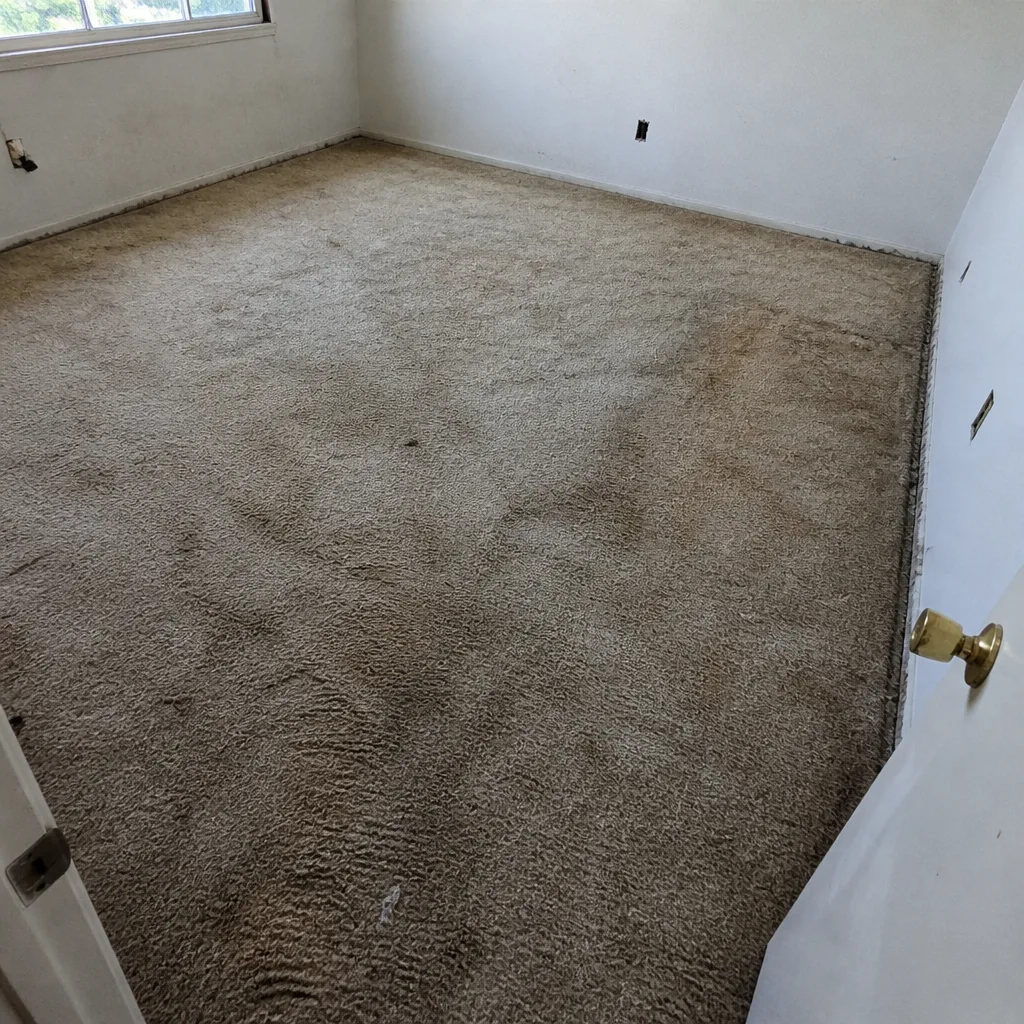 Before
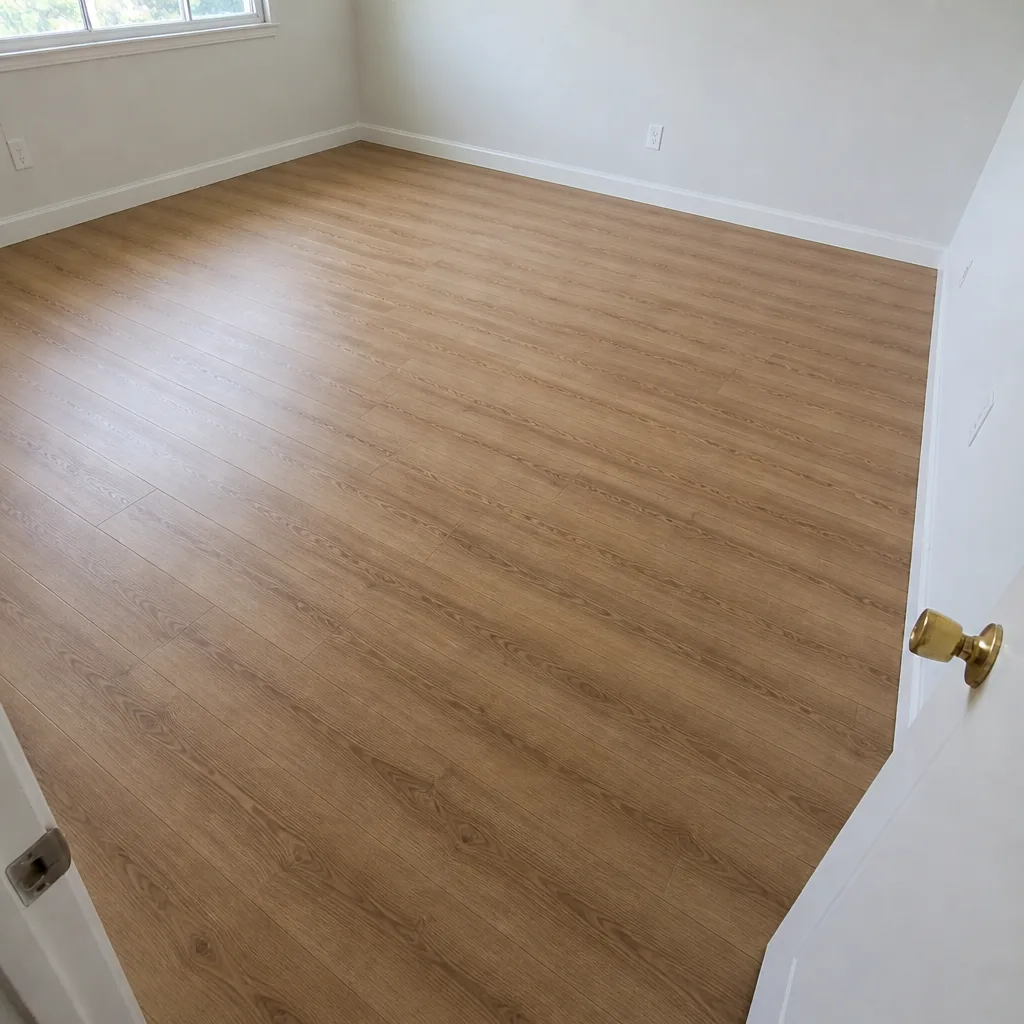 After
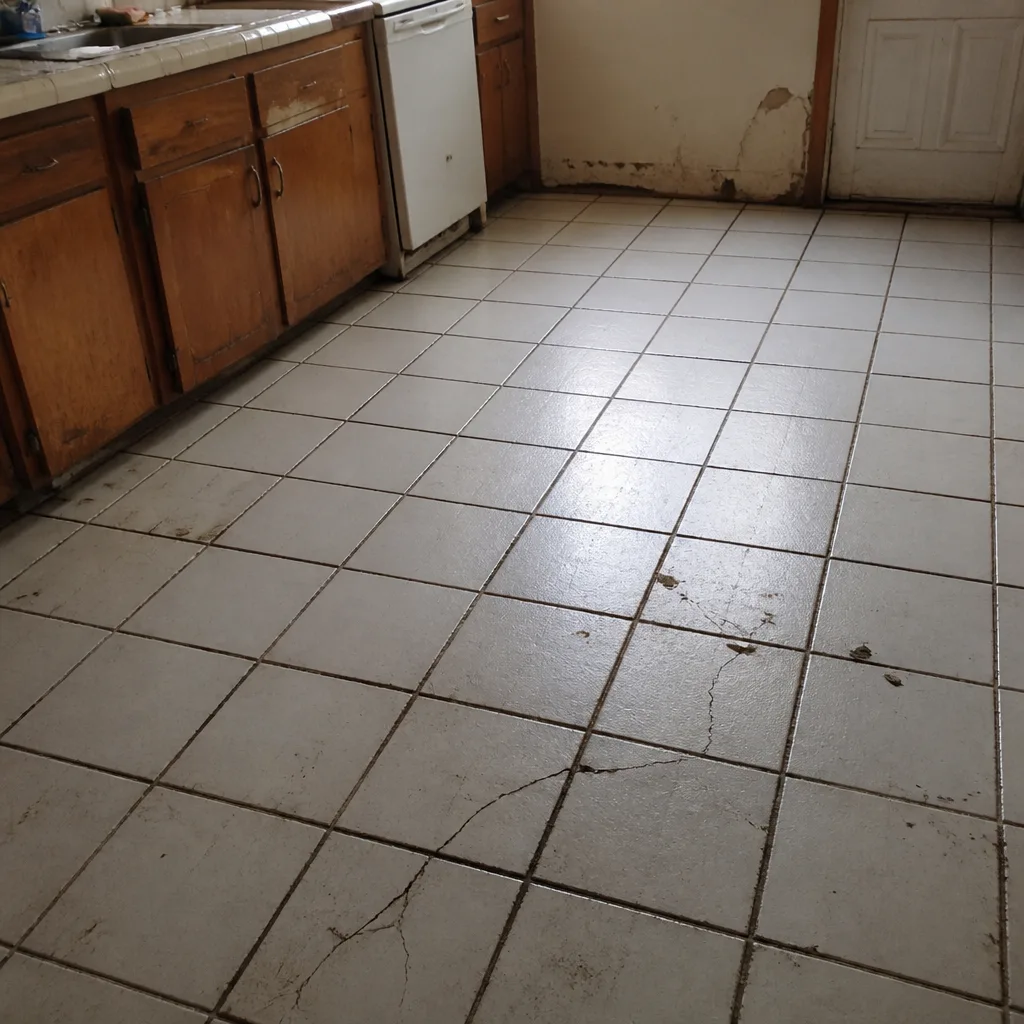 Before
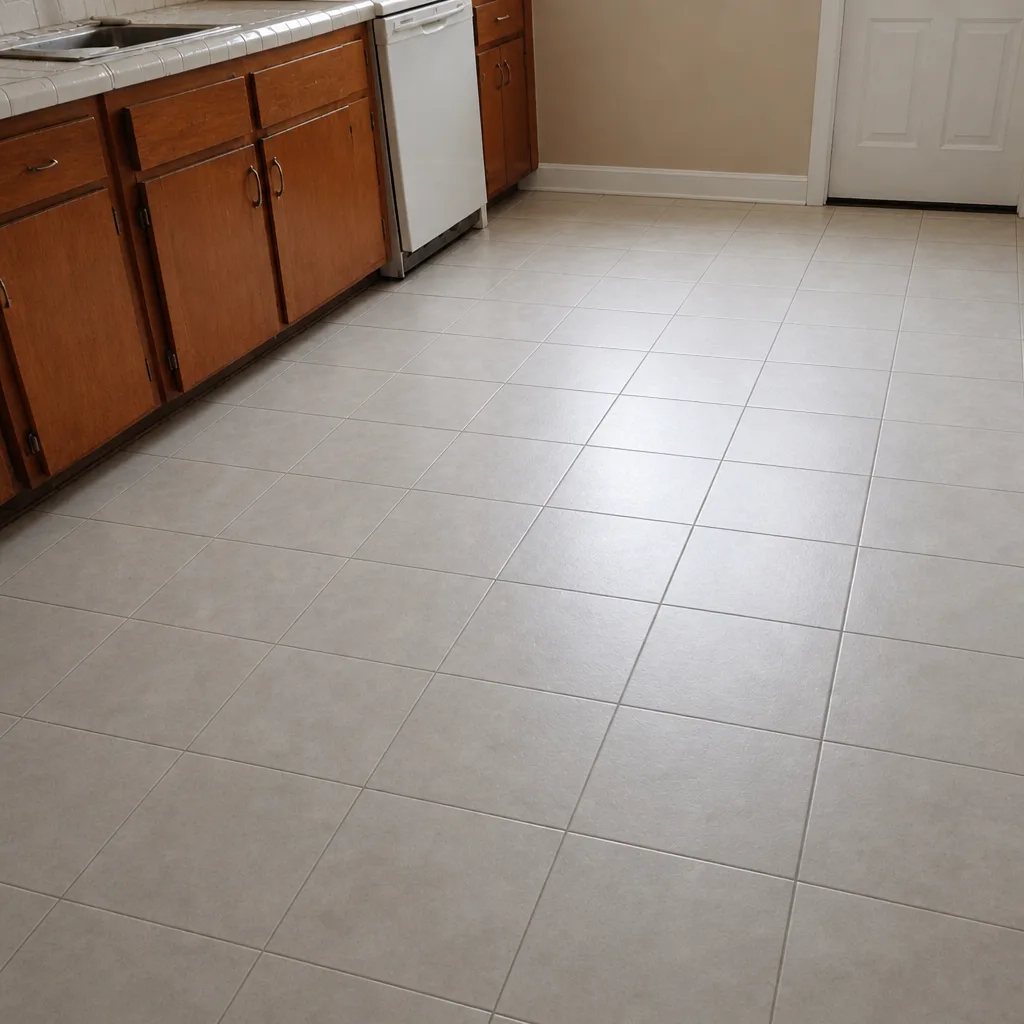 After
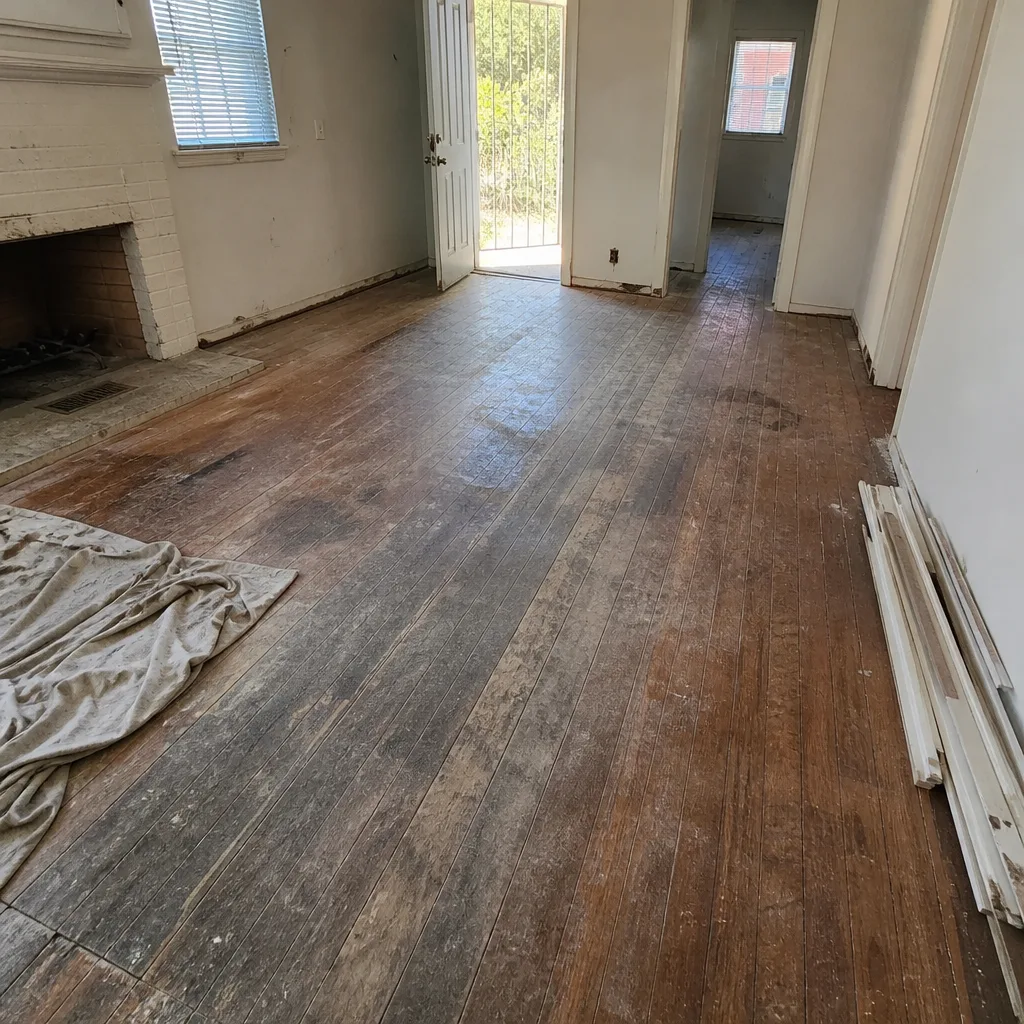 Before
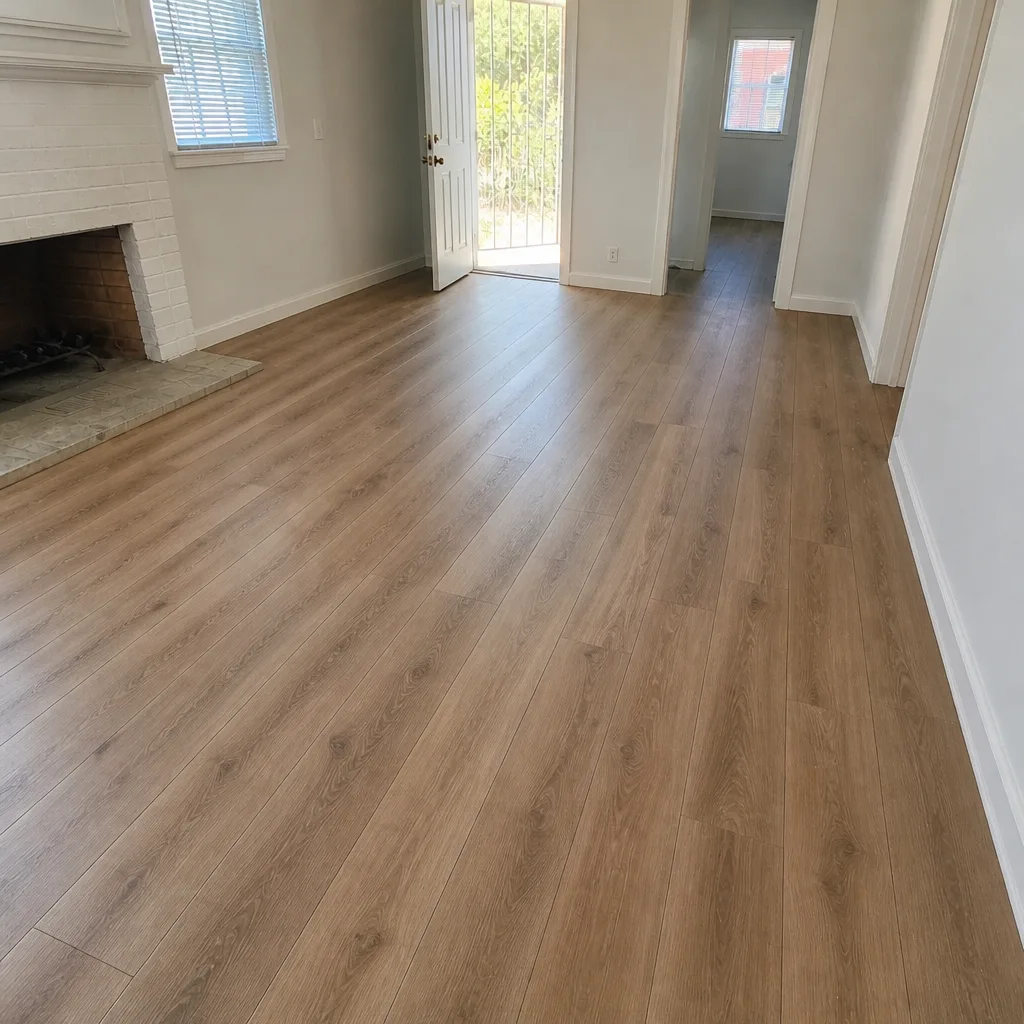 After
When to Call a Professional
Some flooring work genuinely makes sense as a DIY weekend project, but the projects most homeowners get stuck on are the ones that involve a whole room, a whole home, or a material they haven’t installed before. Stairs, thresholds between rooms, tile over concrete, and hardwood refinishing all have hidden complexity that isn’t obvious until you’re halfway through. In those cases, a professional estimate saves both money and time. If you’re near Sunrise Manor and want a straightforward conversation about the project, Sunrise Manor Flooring offers free estimates, and the estimate visit is where the subfloor questions in this guide actually get answered. Call (833) 695-5999. We answer 24/7. Fast dispatch, 7am-7pm. The estimate is free and the written quote is what sets the final price.
Frequently Asked Questions
You should never sign a flooring contract that doesn’t name the contractor as responsible for subfloor prep, flatness correction, and moisture testing, with the actual readings provided to you in writing. That clause is what determines who owns the failure six months later if the floor telegraphs, lifts, or fails at the seam. Without it, you’re accepting responsibility by default for conditions you can’t see. If your contractor won’t add it, that’s a strong signal about how they’d handle a warranty claim. Call (833) 695-5999 to schedule a free estimate with Sunrise Manor Flooring and see what a written quote should look like.
Ask them directly, in writing, and look for the answer in the contract. Employees mean your point of contact from estimate to walkthrough is the same company, and warranty claims go through one party. Day-of subcontractors mean the crew may not have seen the contract or the subfloor until install morning, and your recourse if something goes wrong might depend on the contractor still working with the retailer. Call (833) 695-5999 for a free estimate and a straight answer.
Yes, though for different reasons than in humid climates. The concern in Sunrise Manor isn’t surface humidity; it’s that slab-on-grade construction and seasonal temperature swings can leave moisture in the concrete at levels that will eventually find their way through a floor installed over an unaddressed slab. That’s why moisture readings belong in the estimate process, not in the “we’ll see when we pull the carpet” phase. Call (833) 695-5999 for a free estimate where moisture readings are part of the conversation.
The product warranty covers defects in the material itself, the labor warranty covers installation workmanship, and any satisfaction guarantee covers the period immediately after install. What no warranty typically covers is a failure caused by subfloor conditions that weren’t corrected, so the prep clause in the contract is what makes your warranty usable. Ask to see all three warranties on one page before signing. Call (833) 695-5999 for a free estimate and a plain-language walkthrough of which warranty applies to your floor.
Timing depends on the material, the subfloor condition, and how much prep is required, and the schedule is set at the estimate visit once those are known. Carpet, tile, and hardwood refinishing each have different time profiles, and a whole-home project with multiple materials is scheduled in stages. Ask for the schedule in writing so you know what to plan around. Call (833) 695-5999 to schedule your free in-home measure and estimate.
The estimate is free and doesn’t commit you to booking the work. It’s a visit to see the space, take measurements, look at the subfloor, and give you a written quote with the material cost, labor, and any prep work broken out. That quote is your comparison tool for other contractors. Call (833) 695-5999 to schedule your free estimate with Sunrise Manor Flooring.
The Bottom Line
The flooring contract is where projects are won or lost, and the five questions in this guide are the ones that carry the most weight. Get subfloor responsibility, crew employment status, warranty stacking, change-order procedure, and payment schedule answered in writing before you sign anything. In Sunrise Manor, the dry climate, slab construction, and seasonal temperature swings make the prep language even more important, and no amount of brand prestige covers a floor installed over an unaddressed subfloor. Nine brands, one specialist, and a written quote that says exactly what’s included – that’s the standard your contract should reflect. The floor sets the tone for every room above it, and the paperwork under that floor deserves the same care.
Sunrise Manor Flooring can walk you through a free estimate and put those answers in writing on the quote before you sign. Call (833) 695-5999. We answer 24/7. Fast dispatch, 7am-7pm. The written estimate sets the final price, the estimate is free, and the schedule is set at the estimate visit.
Written by the team at Sunrise Manor Flooring.