
Last updated November 17, 2026
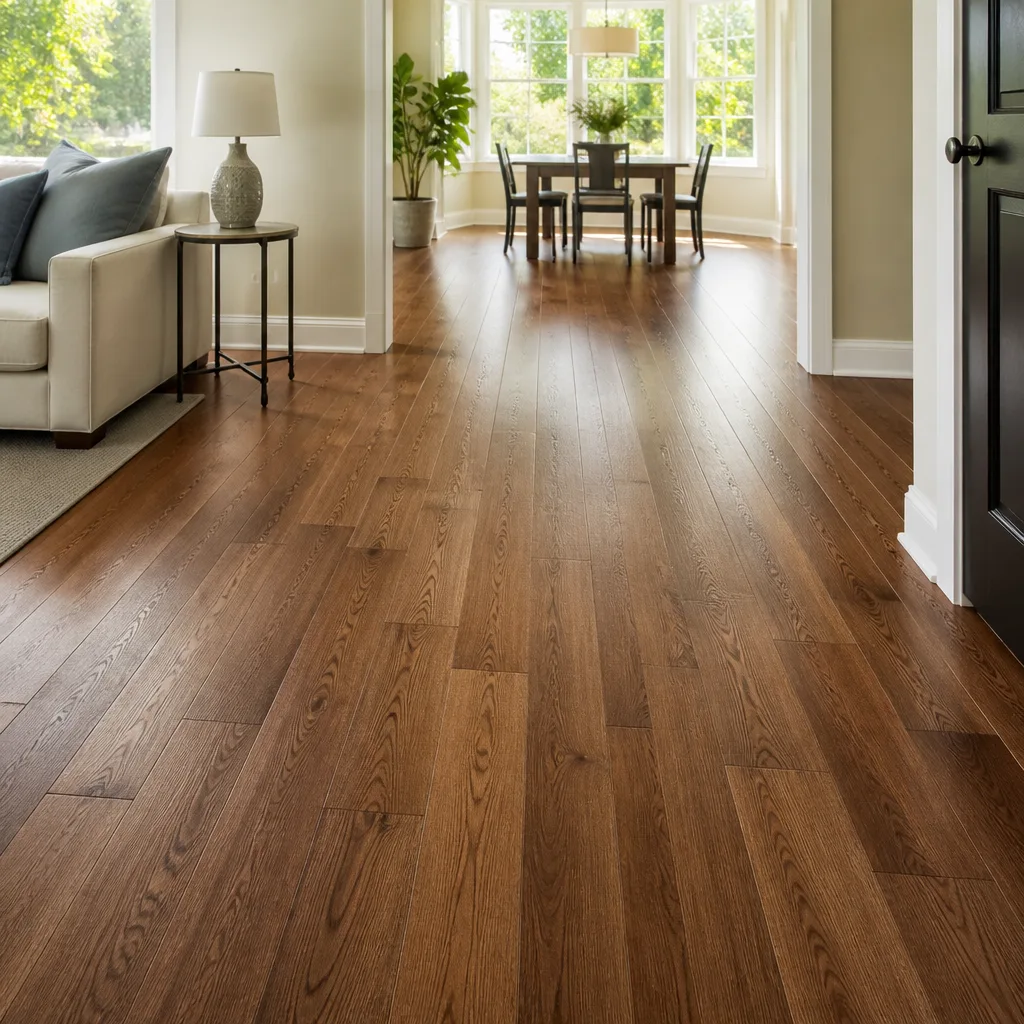 Hardwood
 Engineered hardwood
 Luxury vinyl plank
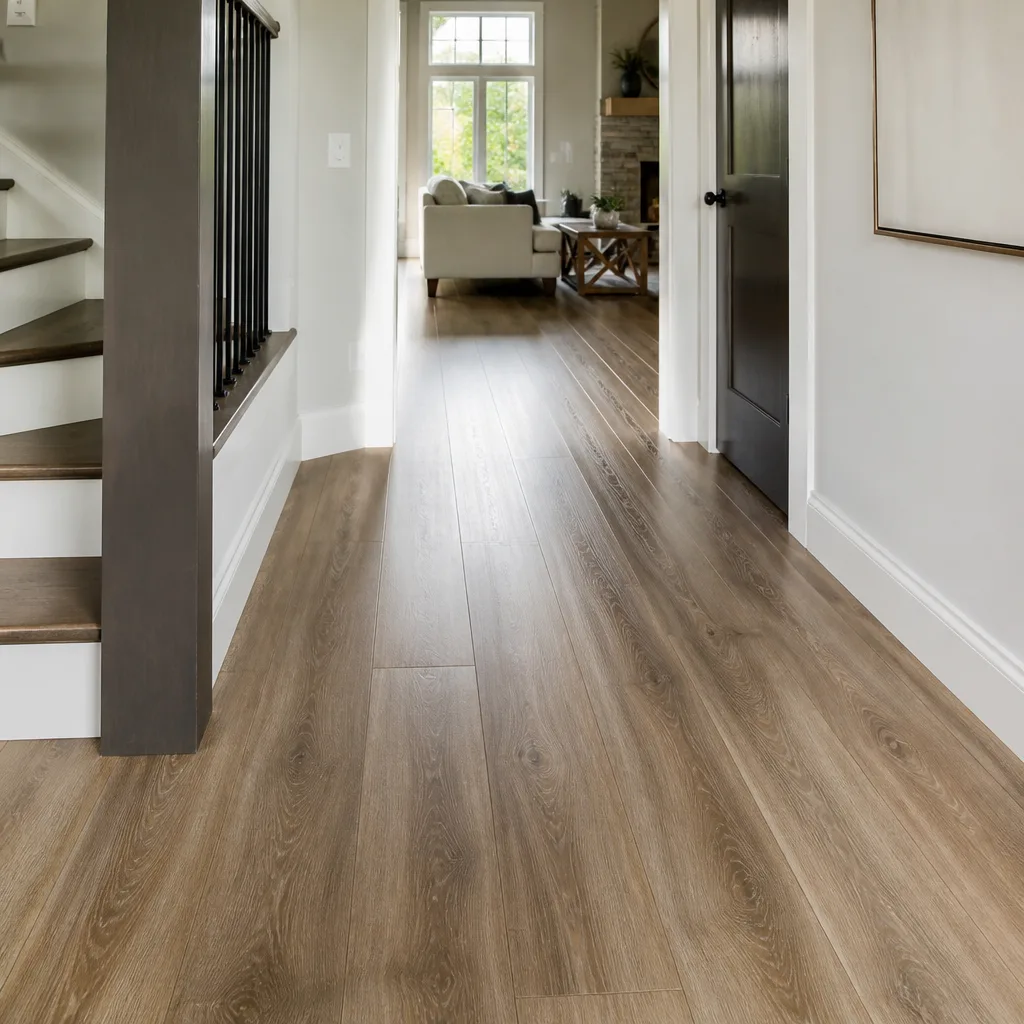 Laminate
 Porcelain tile
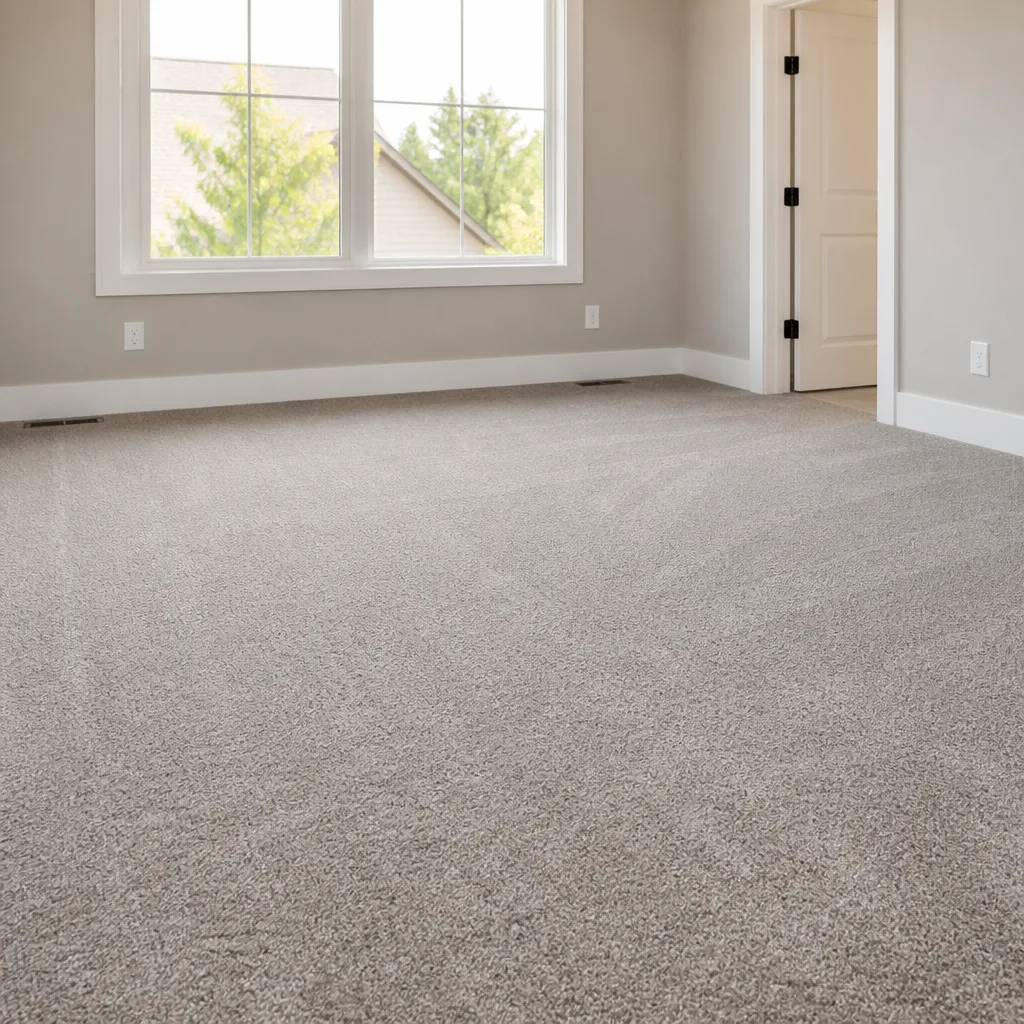 Carpet
 Shaw
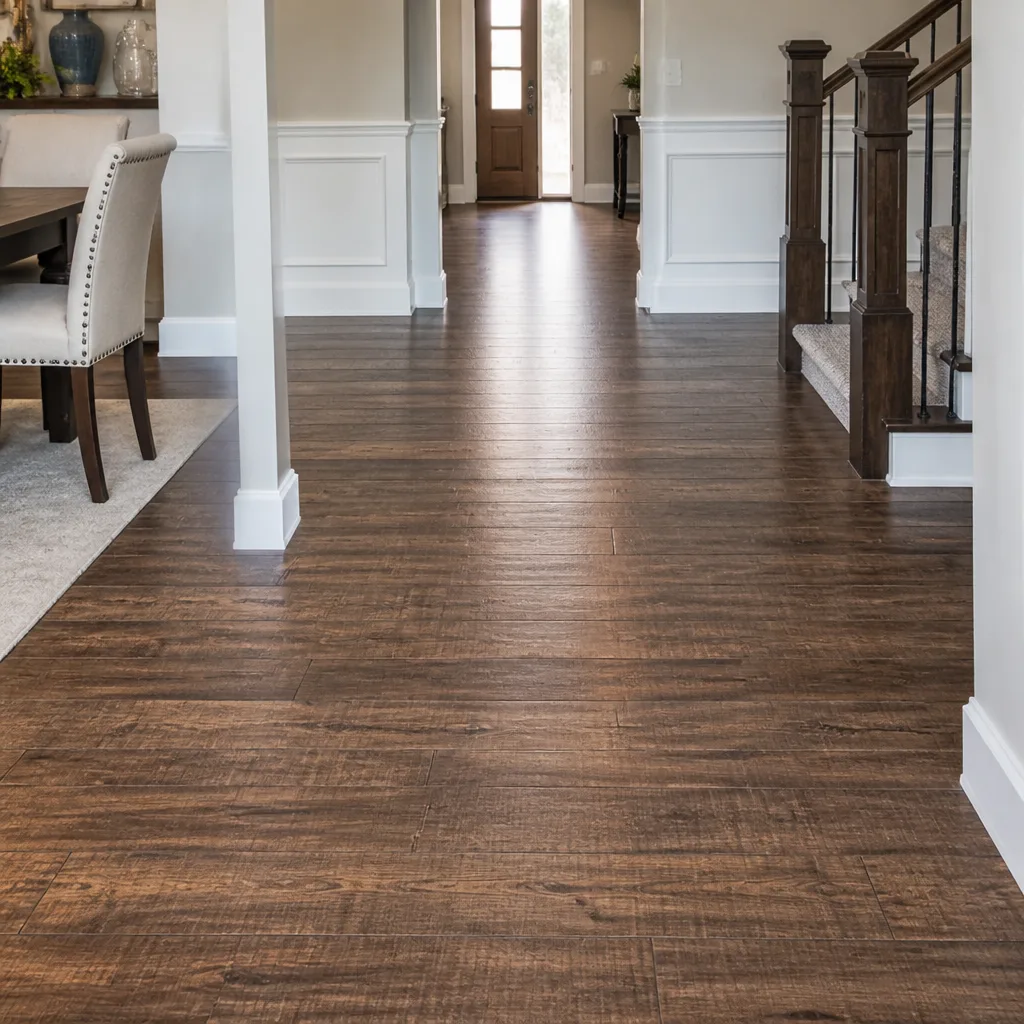 Mohawk
 COREtec
 Pergo
Free in-home measure and written estimate: Shaw, Mohawk, COREtec and Pergo lines compared on your own rooms, with carpet, tile, vinyl plank, laminate and hardwood laid out side by side
Get your free estimateFix It or Start Over: Flooring Repair vs Replacement
A patched carpet seam or filled hardwood crack can look fine for six months and then open up again, not because the repair was done wrong, but because the condition that caused the original damage was never diagnosed. That’s the piece most homeowners never hear about when they start pricing out a fix. The visible damage is a symptom; the cause is usually underneath it, in the subfloor, the slab, or the moisture movement through a Sunrise Manor home. This guide walks through the three diagnostic questions every flooring specialist should answer before quoting a repair, the specific scenarios where a repair genuinely wins, and the ones where replacement is the cheaper decision over five years even though the upfront number is higher.
Quick Answer
Repair when the damage is localized, the cause has been found and fixed, and the surrounding material still has usable life left. Replace when the underlying condition can’t be addressed without opening the floor, when odor or moisture has saturated the subfloor, or when more than a small fraction of the material is already failing. Hardwood refinishing sits in a third category: neither repair nor replacement, and often the smartest financial option when the wood is thick enough to sand again. Every one of those calls depends on a subfloor inspection first, and that inspection is the part of the estimate most homeowners never get.
Styles & brands we work with
- Hardwood
- Engineered hardwood
- Luxury vinyl plank
- Laminate
- Porcelain tile
- Carpet
- Shaw
- Mohawk
- COREtec
- Pergo
Table of Contents
- The Three Diagnostic Questions Before Any Repair Quote
- When Repair Wins
- When Replacement Wins Even at a Higher Price
- Refinishing: The Third Option
- What a Real Repair Estimate Should Include
- Why Sunrise Manor Slabs Change the Math
- Common Mistakes to Avoid
- Frequently Asked Questions
The Three Diagnostic Questions Before Any Repair Quote
Before anyone quotes you a repair price, ask these three questions. If the answer to any of them is “I don’t know” or a shrug, the quote is a guess dressed up as a number. A repair that skips diagnosis is a repair that comes back.
1. What caused the original damage?
Carpet stains can come from a pet accident, a spilled drink, a slow leak from an appliance, or moisture wicking up from the slab. Each one points to a different fix. Tile cracks can come from impact, from slab movement, or from a tile that was set over an uncoupled slab that has since shifted. Hardwood cupping usually traces to moisture, not to wear. The visible damage tells you where to look, not what to do about it.
2. Has that cause been eliminated?
This is the question that separates a repair that holds from a repair that fails in six months. A pet stain that’s been cleaned and dried is a closed case. A slow leak under a dishwasher that’s still leaking is not. A grout crack from a slab that’s still moving is not. If the cause is still active, no amount of new material will stay put.
3. How much usable life does the surrounding material still have?
A single damaged plank in a twenty-year-old floor with the same species still available is a clean repair. That same plank in a floor that’s already showing wear across half the room is a repair that buys a few years at best. The honest answer here matters more than the price, and it’s the one most shops skip because it makes the sale harder.
In our experience across Sunrise Manor homes, that third question is where the real cost of a shortcut shows up. A localized fix that skips a subfloor moisture check often costs more over five years than a full replacement done right the first time, not because the repair was expensive but because it gets repeated.
When Repair Wins
Repair wins when the damage is contained and the cause is closed. These are the scenarios where a fix is the right call and a full replacement would be money spent for no reason.
- Isolated pet stains in otherwise healthy carpet. A single area of damage in a carpet that’s flat, tight, and evenly worn can usually be patched with matching material. The key word is matching; if the original carpet is still available or a close match can be sourced, the seam disappears into the field.
- Hairline grout cracks from minor slab movement. A fine crack in grout that hasn’t moved the tile itself is often a regrout, not a tear-out. The tile stays, the joint gets repacked, and the floor looks like it did before the crack showed up.
- Single-plank hardwood damage where the species still matches. A gouged or water-stained plank in a floor where the same species and grade is still available gets replaced and blended in. The rest of the floor keeps its character and its finish.
- A localized failed seam in a carpet that’s otherwise sound. A seam that’s opened at a doorway or along a high-traffic run can be re-stretched and re-seamed without pulling the whole room.
What all four share is a closed cause. The pet stain is dried and treated, the slab has stopped moving, the water event is over. A repair over an active cause is a patch over a problem, and it will show up again on the same schedule.
For carpet specifically, a repair is often the difference between a floor that lasts another few years and a full tear-out. That’s part of why carpet installation work in Sunrise Manor so often starts with a repair conversation rather than a replacement pitch.
When Replacement Wins Even at a Higher Price
Replacement wins in more cases than homeowners expect, and the reason is almost always the subfloor. The material above the slab can be patched; the slab underneath can’t be, at least not without opening the floor anyway. Once you’re opening the floor, the repair premium disappears.
- Carpet with subfloor odor saturation. Pet odor that’s soaked into the pad and the subfloor doesn’t come out with surface cleaning. Patching over it traps the smell under new material and it returns in warm weather. A full replacement with a proper subfloor treatment is the only fix that holds.
- Tile laid over an uncoupled slab that has since shifted. When the slab under a tile floor has moved since installation, the tile isn’t the problem; the bond is. Replacing individual tiles just repeats the failure at the next weak point. The floor needs to come up and go back down over a proper underlayment.
- Hardwood with more than 30% of planks showing cupping. Cupping across a large share of the floor means moisture is reaching the wood across the whole field, not in one spot. A plank-level repair fixes one board and leaves the rest of the floor to keep cupping. At that point a full replacement or a refinish-and-dry approach is the honest recommendation.
- Carpet in a room that’s been flooded or had a slow leak for a season. Once the pad is saturated and the subfloor has been wet long enough to swell or grow, the carpet is a write-off even if the top face looks fine.
Each of these is a case where the repair costs less on paper and more in practice. That’s the calculation to make before signing a repair quote, not after the second one.
Refinishing: The Third Option
Hardwood refinishing sits in a category of its own. It’s not a repair, because you’re not patching a spot; it’s not a replacement, because you’re keeping the floor you already have. It’s a full-floor resurfacing that removes the worn top layer and restores the finish across the whole field.
For a hardwood floor that’s sound but looks tired, refinishing is usually the smart financial decision. You keep the original wood, you get a uniform finish, and you avoid the cost and disruption of tearing out and reinstalling. That’s the part of the portfolio most flooring shops don’t offer, and it’s the reason we treat it as a core service rather than an add-on.
The limit on refinishing is the wear layer. Solid hardwood can usually be sanded repeatedly. Thinner engineered products have a set number of sanding cycles before the wear layer is exhausted, typically around two refinishes at a 1.5mm wear layer. Once the wear layer is gone, refinishing isn’t an option, and replacement is the only path. That check happens at the estimate visit, on the actual floor, not over the phone.
For floors that pass the wear-layer check, refinishing beats replacement on cost and keeps the character of the original wood. For floors that don’t, the honest answer is replacement, and we’d rather tell you that at the estimate than sell a sanding that fails in a year. If you’re weighing refinishing against tile or a new hardwood floor across a whole home, that’s where tile flooring installation comes into the conversation, since a single call can cover both.
What a Real Repair Estimate Should Include
Most repair quotes are a number and a scope. A real estimate includes three things: the subfloor inspection finding, the material match confidence level, and an honest read on how much floor life is left after the repair.
- The subfloor inspection finding. Was the subfloor checked for moisture, movement, or damage before the repair was priced? If the quote doesn’t say, ask. A repair priced without a subfloor read is a repair priced on assumption.
- The material match confidence level. For carpet and hardwood, the repair only works if the new material blends with the old. A confident match is stated plainly; a questionable match should be flagged as a risk, not buried in the scope.
- Remaining floor life after the repair. This is the number most quotes omit. A repair that buys two years on a floor with five years left is a good repair. A repair that buys two years on a floor with one year left is postponing the inevitable, and you should know that before you sign.
- The cost of the repair against the cost of replacement, side by side. Not as a sales tactic, but as information. You’re making an investment decision; you should see both numbers.
- The cause, stated in plain language. “Moisture from below” or “slab movement” or “pet saturation” tells you what to watch for. “Wear and tear” tells you nothing.
Those five items are why we price by written estimate rather than by phone. You can’t inspect a subfloor over a call, and you can’t honestly assess remaining floor life without seeing the floor. The written estimate is the whole point of the visit, and it’s free.
Why Sunrise Manor Slabs Change the Math
Sunrise Manor is a slab-on-grade community. That single fact changes the repair-vs-replacement calculation in ways that don’t apply to homes with a raised foundation or a basement underneath.
On a slab, there’s no air gap between the ground and your floor. Moisture moves through the concrete, and the floor material is the first thing that meets it. In a dry desert climate, that moisture movement is seasonal and uneven: the slab draws down in the hottest, driest stretch of the year and picks up moisture when conditions change. Hardwood cupping, grout cracking, and carpet odor all trace back to that movement more often than to anything that happened on top of the floor.
That’s why the diagnostic questions in this guide lean so hard on cause. A grout crack in a Sunrise Manor home is often a symptom of slab movement, not a sign that the grout was bad. A cupped plank is often a symptom of moisture, not a sign the wood was defective. A repair that addresses the symptom without addressing the slab is a repair that gets scheduled again.
For anyone living in or moving to the area, the local context matters: Sunrise Manor is a neighborhood where the housing stock and slab construction shape what flooring decisions make sense. A tile floor that’s been down ten years without movement is a different repair candidate than a floor that’s been down three and is already cracking.
We don’t treat that as a reason to always replace. We treat it as a reason to inspect before quoting, every time, in every Sunrise Manor home we walk into.
How the Decision Breaks Down by Floor Type
The general rule applies across all three flooring categories, but the specific thresholds look different depending on what’s on the floor.
Carpet
Carpet is the most repair-friendly of the three. A localized stain, a failed seam, or a single-area burn can often be patched with matching material if the original or a close match is available. The threshold where replacement wins is odor saturation, widespread wear across the field, or a pad that’s been wet. If the pad is compromised, the repair doesn’t hold no matter how clean the top face looks.
Tile
Tile repair is usually about the bond, not the tile. A single cracked tile from impact is a straightforward replacement if a matching tile is on hand. A pattern of cracks across a floor points to the slab underneath, and that’s where replacement usually wins. Hairline grout cracks from minor movement are a regrout. Tile that’s tented or visibly lifted is a replacement conversation.
Hardwood
Hardwood offers the most options because of refinishing. A single damaged plank can be replaced if the species is still available. More than 30% cupping points to a whole-floor problem. And whether refinishing is on the table depends on the wear layer, checked at the estimate. On floors with a healthy wear layer, refinishing often makes more sense than a piecemeal repair, because it addresses the whole field at once.
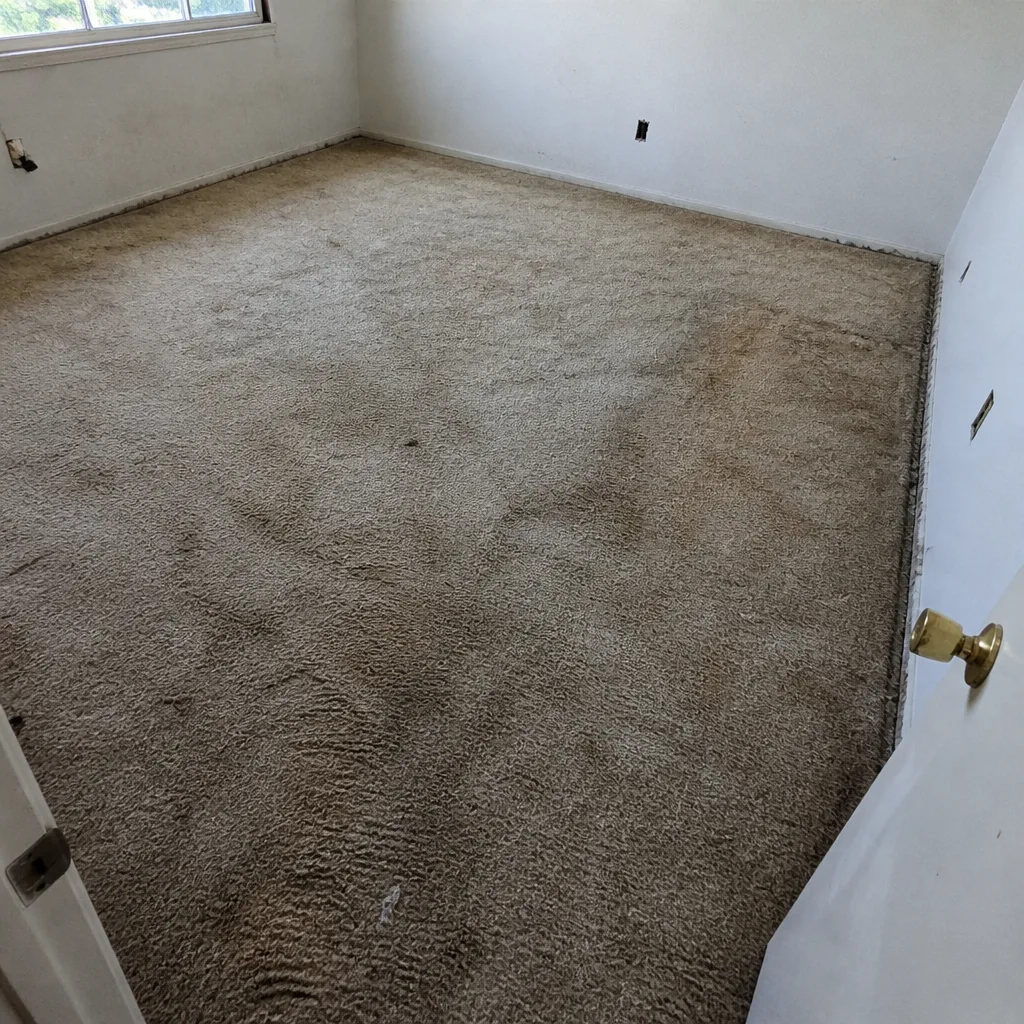
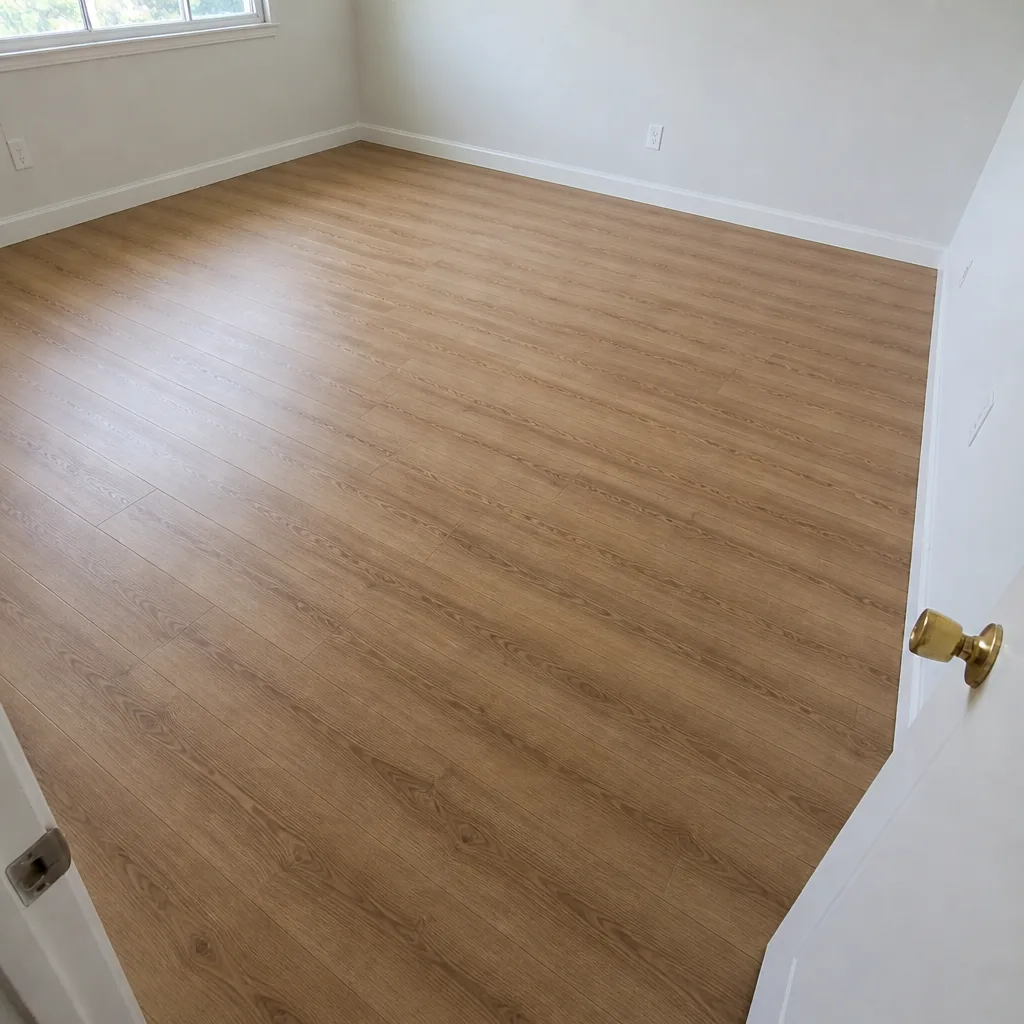
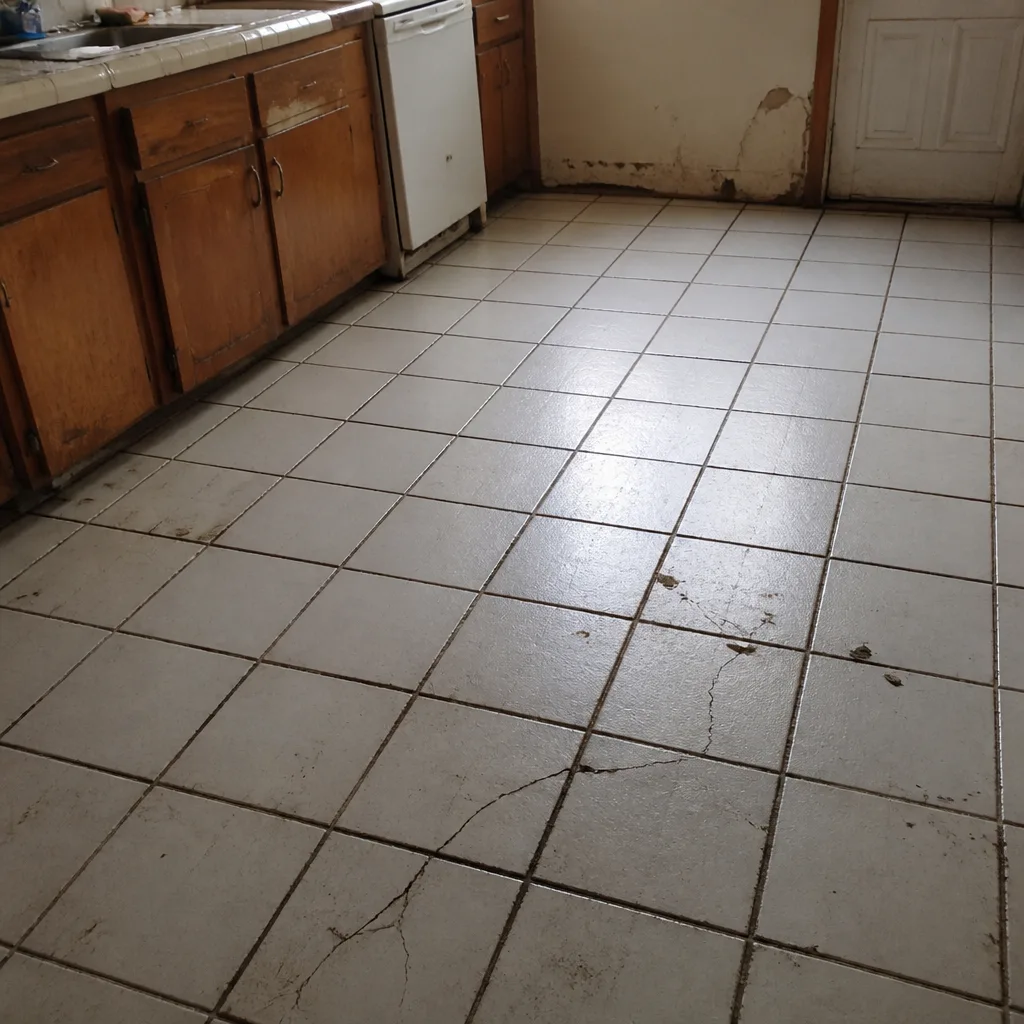
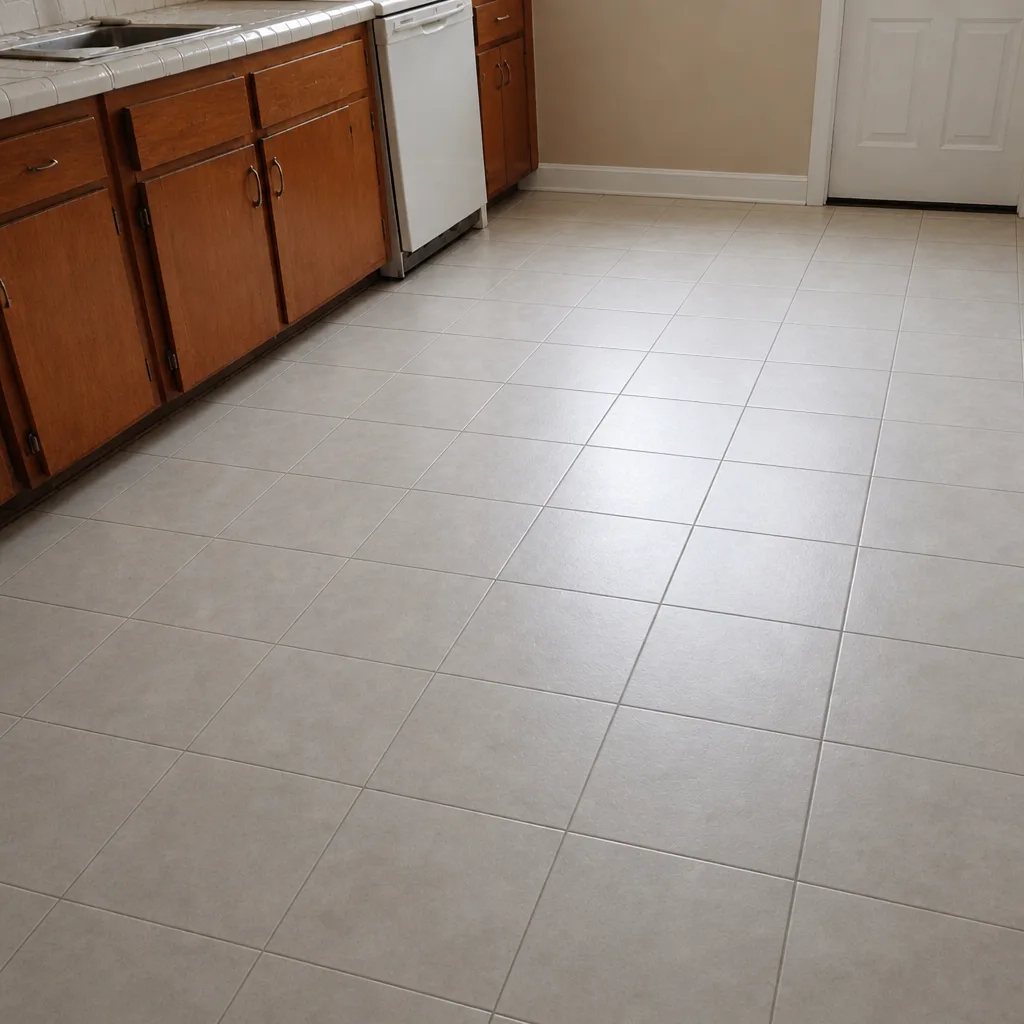
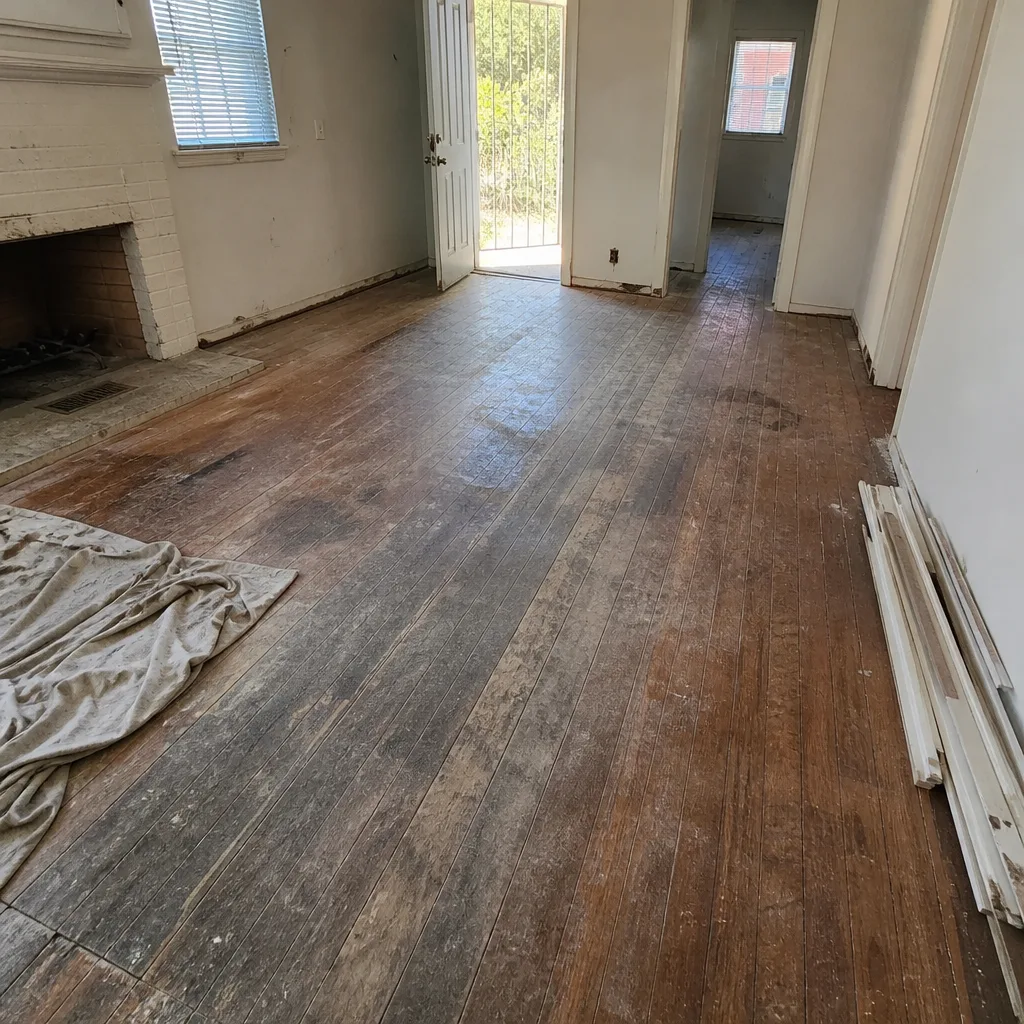
See the difference
 Before
 After
 Before
 After
 Before
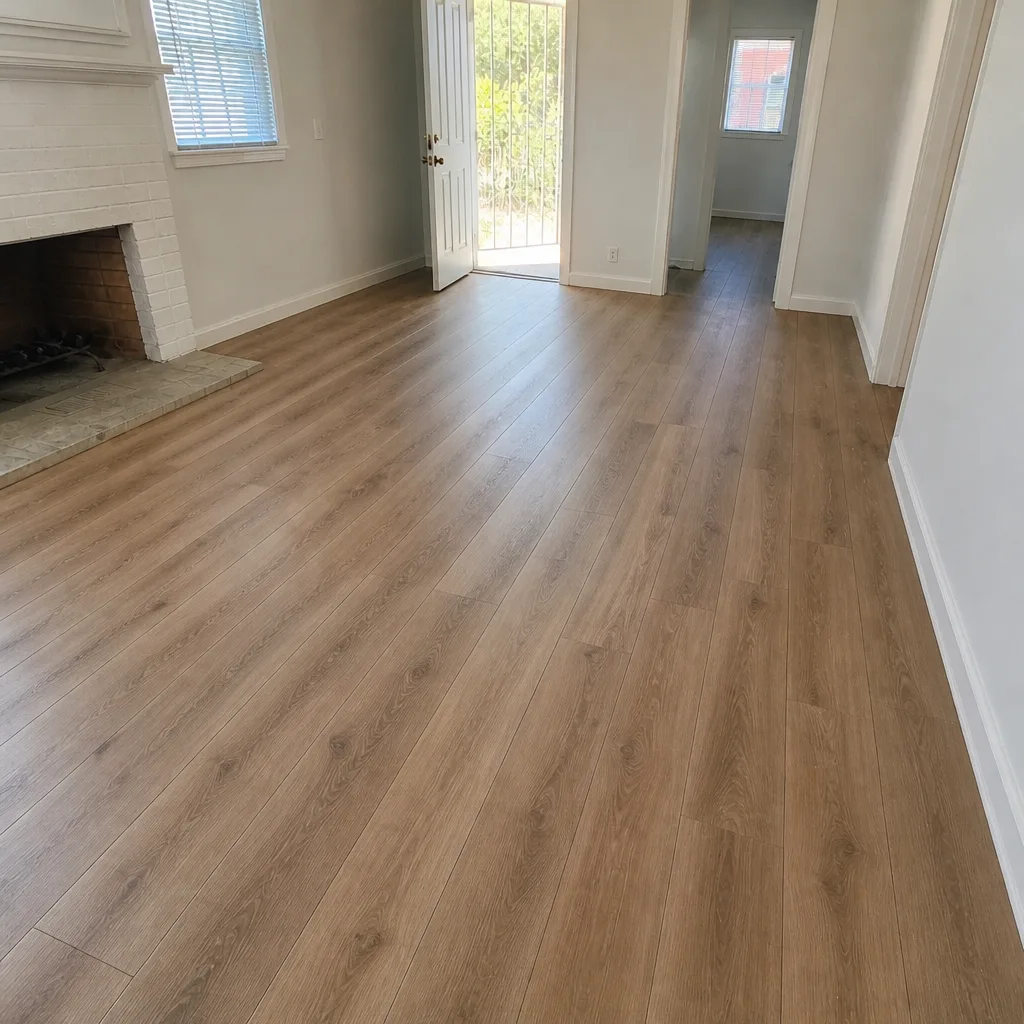 After
Common Mistakes to Avoid
- Quoting a repair without a subfloor inspection. A price given without checking the slab underneath is a price built on assumptions. Ask what the inspection found before you agree to anything.
- Treating the visible damage as the whole problem. A stain, a crack, or a cupped plank is a symptom. The cause is what determines whether a repair holds.
- Patching over odor instead of addressing it. Carpet odor that’s soaked into the pad and subfloor comes back after a patch. It’s the most common repair regret we see.
- Assuming refinishing is always possible. Thinner engineered hardwood has a limited number of sanding cycles. Once the wear layer is exhausted, refinishing isn’t an option, no matter how the floor looks.
- Matching brand without matching the actual product. Carpet and hardwood repairs depend on a real material match, not just the same manufacturer. A different dye lot or species shows up at the seam.
- Comparing a repair quote to a replacement quote without the long view. A repair that gets repeated twice in five years costs more than the replacement you didn’t want to price. Ask for both numbers side by side.
- Letting a contractor choose the material without seeing the brand. The floor you live on for the next fifteen years shouldn’t be a mystery. Ask specifically what product is going down, planks, tile, or carpet, before the install is scheduled.
How Sunrise Manor Flooring Handles the Repair-or-Replace Call
We’re a residential flooring specialist, not a general contractor who also lays floors. That distinction matters here, because the repair-or-replace decision depends on a diagnostic conversation, and the person diagnosing should be the person doing the work.
Our work covers three disciplines: carpet installation, tile flooring installation, and hardwood refinishing. That range is why a single estimate can answer the question honestly across the whole floor, rather than steering every job toward whichever service a particular crew happens to offer. We install and service the floor you choose; we don’t run a showroom and we don’t sell product off a shelf, so the recommendation follows the inspection, not a sales target.
The brand range supports that. For homeowners weighing a carpet repair against a new carpet, Shaw and Mohawk give real options on the replacement side. For tile, Daltile lines are among the most specified in residential construction, which matters when a repair requires matching existing tile. For hardwood refinishing, the question is the wear layer, and we check it on the floor. Our technicians have up to 8 years of experience with these products and this kind of diagnosis, and the estimate is where that experience gets applied.
One call covers every floor in the house. That’s not a slogan; it’s the practical reason a whole-home flooring decision doesn’t require coordinating three contractors and hoping their diagnoses line up.
When to Call a Professional
Call a professional when the damage involves the subfloor, the slab, or moisture you can’t trace on your own. Call when a repair quote didn’t include an inspection finding. Call when you’re comparing a repair and a replacement and want both numbers in writing from someone who can do either. Call when the floor is hardwood and you don’t know whether it can be sanded again, because that’s a wear-layer question that gets answered on the floor, not over the phone. Sunrise Manor Flooring offers free estimates in Sunrise Manor. Call (833) 695-5999. We answer 24/7. Fast dispatch from 7am to 7pm, Sunday through Friday.
Frequently Asked Questions
Repair is cheaper upfront when the damage is localized and the cause is fixed, but replacement is often cheaper over five years when the cause is still active or the subfloor is saturated. The only way to know which applies to your floor is a subfloor inspection at the estimate. Call (833) 695-5999 for an exact quote, since estimates are free.
Yes, when the damage is contained and a matching material is available. A single room with a localized stain or failed seam can usually be repaired without touching the rest of the house. The match is the limiting factor, and it’s checked at the estimate.
It depends on the thickness of the wear layer, which is checked at the estimate visit. Solid hardwood can usually be sanded more times than thin engineered products. Thinner engineered floors often support around two refinishes at a 1.5mm wear layer before the wear layer is exhausted and replacement becomes the only option. We check the actual floor before recommending either, and we’d rather tell you no than sell a sanding that fails.
Hairline grout cracks usually trace to slab movement, not to the grout itself. In slab-on-grade homes, seasonal moisture movement under the concrete can flex the floor just enough to open joints. A regrout handles minor cracking; a pattern of cracks across the floor points to a larger issue that’s worth a proper look.
Three things: the subfloor inspection finding, the material match confidence level, and an honest read on how much floor life is left after the repair. Most quotes give you a number and a scope. Those three items are what tell you whether the number is honest. Call (833) 695-5999 to schedule a free estimate that includes all three.
Usually not for a single room, though a whole-home project takes more planning. The schedule and the disruption are set at the estimate, once the scope is clear. You’ll know what to expect before the install day is booked.
The Bottom Line
The repair-vs-replace decision comes down to three things: what caused the damage, whether that cause has been eliminated, and how much life the surrounding material has left. If the answer to all three is favorable, repair. If the cause is the slab or the subfloor, replacement usually wins over five years even when the upfront number hurts. And if the floor is hardwood with a healthy wear layer, refinishing is often the smarter financial move than either repair or replacement. In Sunrise Manor’s slab-on-grade homes, a subfloor inspection belongs in every estimate. Without it, you’re pricing a guess.
Get a Free Flooring Estimate in Sunrise Manor
Whether you’re deciding between a carpet patch and a new floor, weighing tile repair against replacement, or wondering if your hardwood can be refinished, the honest answer starts with a look at the floor and the slab underneath. Nine brands, one specialist, and a written estimate that covers the three questions that matter. Call (833) 695-5999 for a free estimate. We answer 24/7. Fast dispatch from 7am to 7pm, Sunday through Friday. If you’re still exploring the full range of what we do, start with Sunrise Manor Flooring and see how carpet, tile, and hardwood refinishing fit together under one call.
Written by the team at Sunrise Manor Flooring.